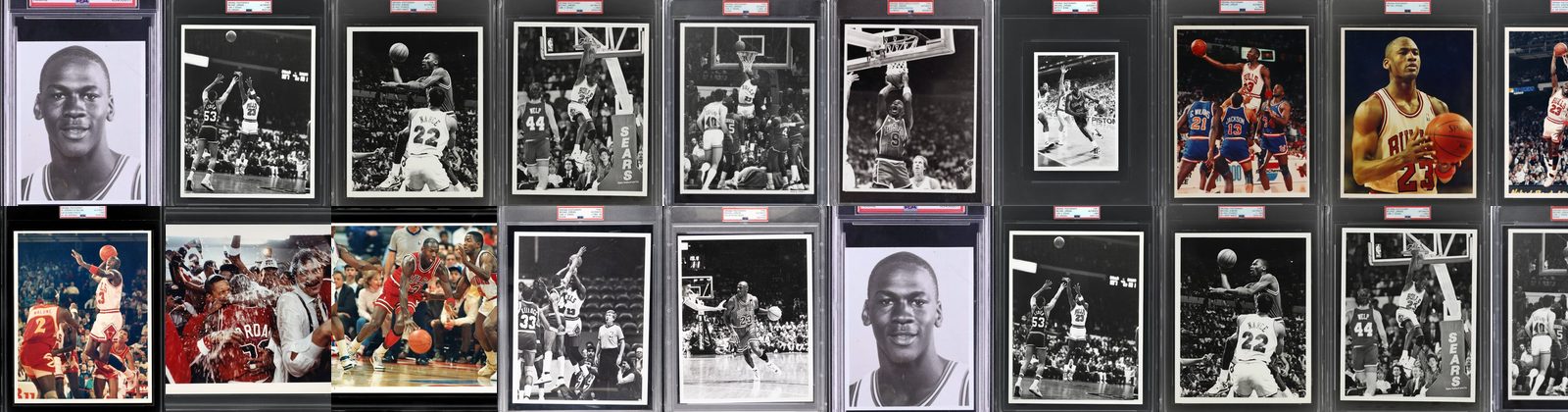
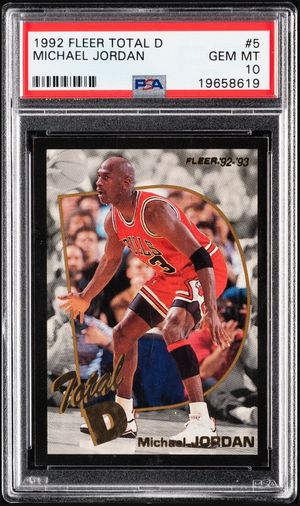
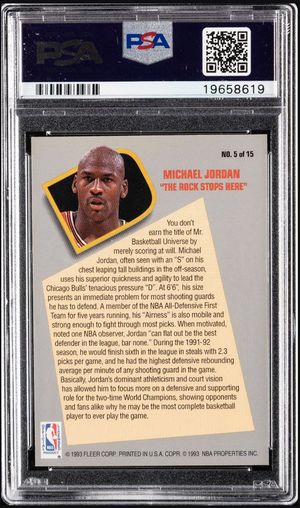
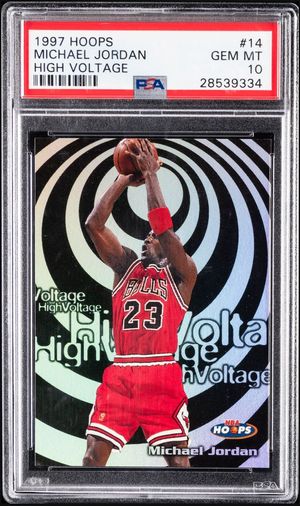
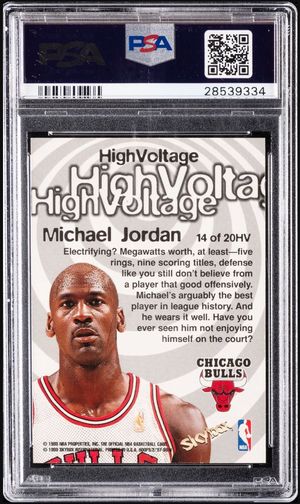
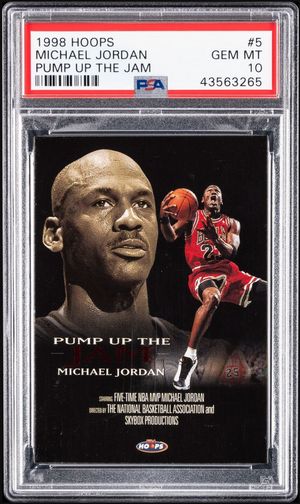
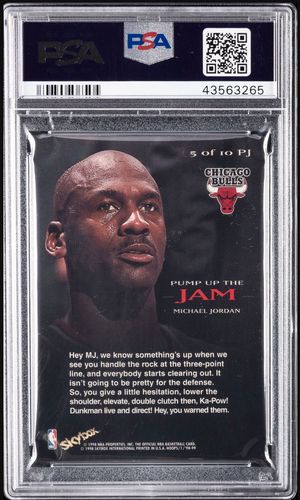
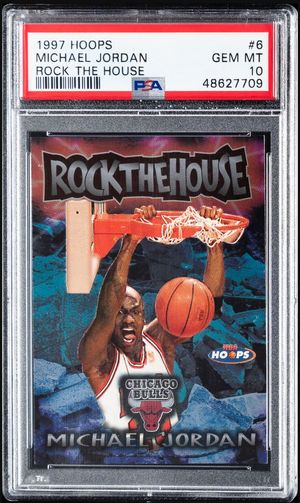
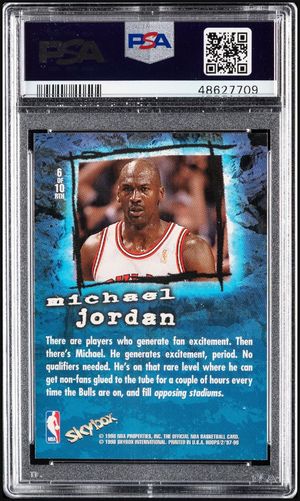
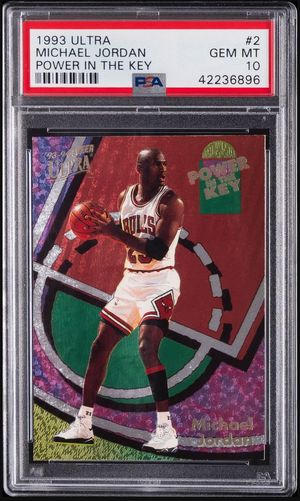
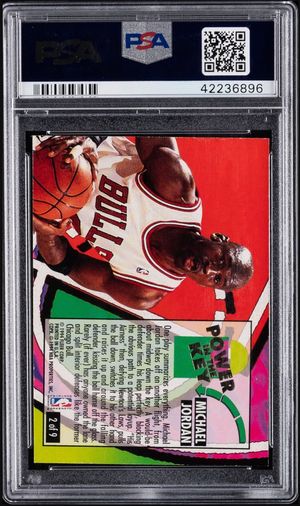
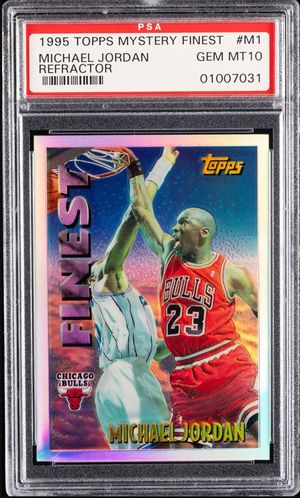
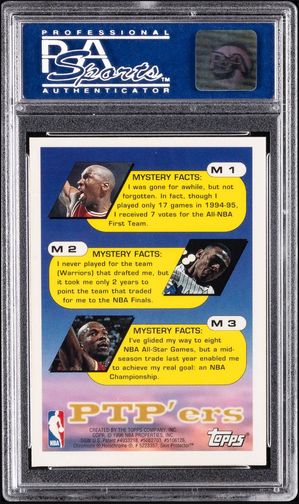
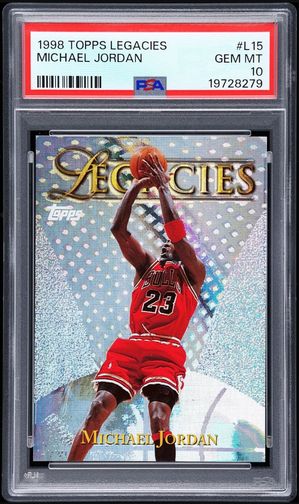
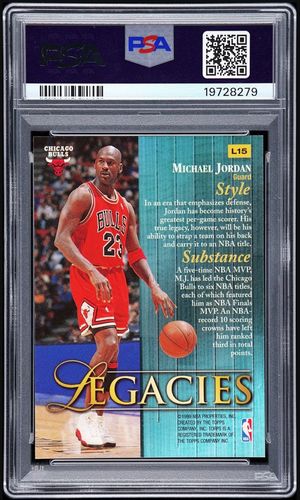
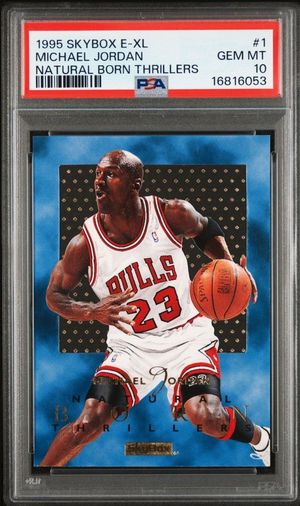
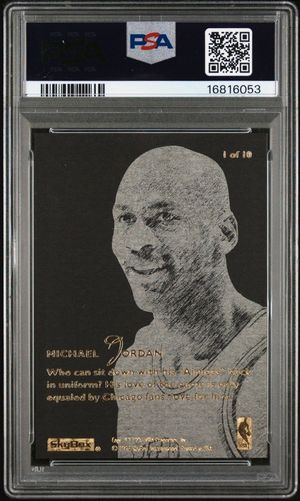
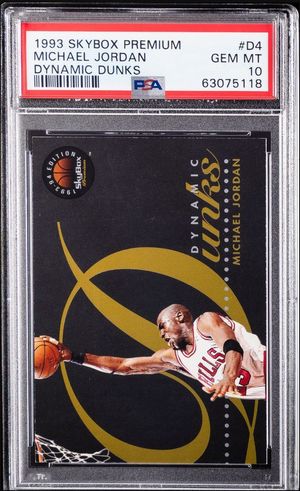
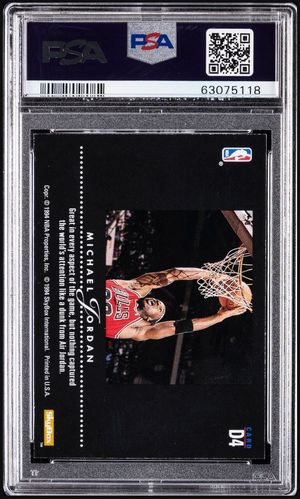
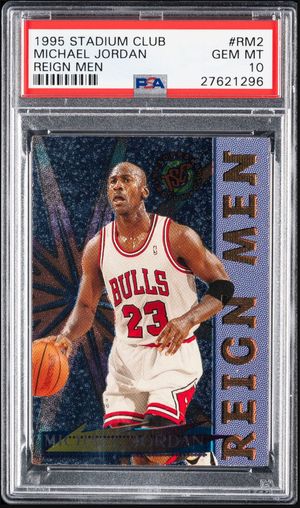
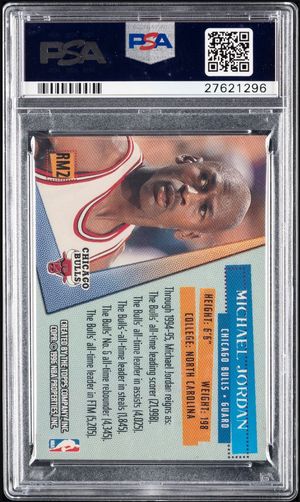
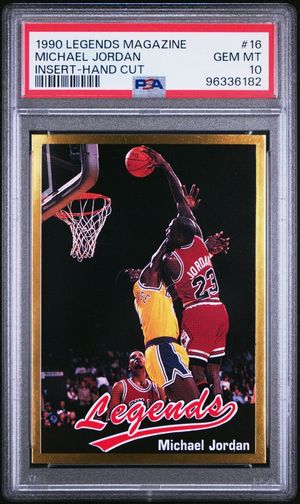
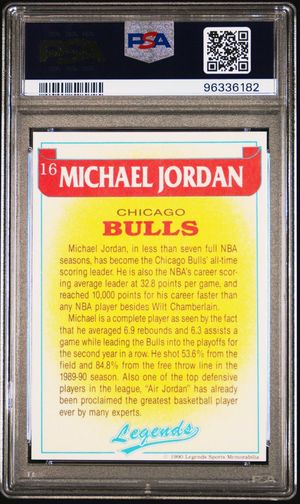
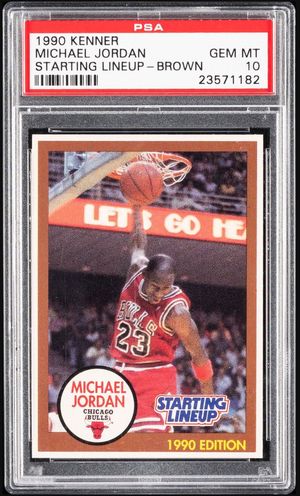
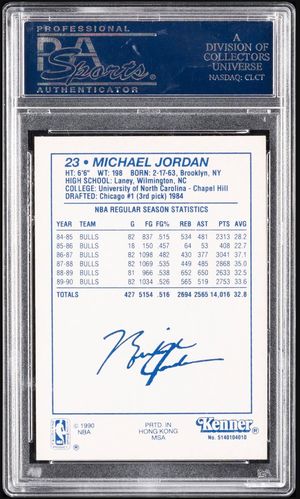
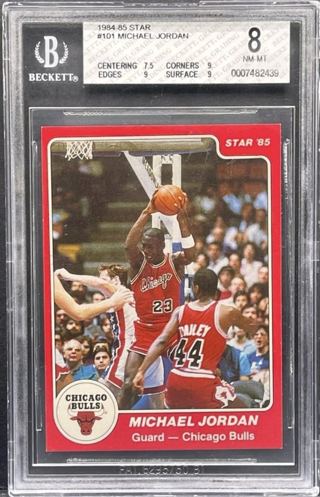
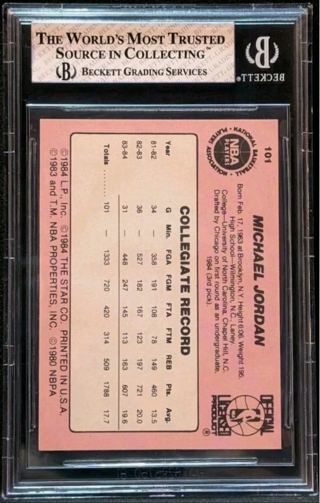
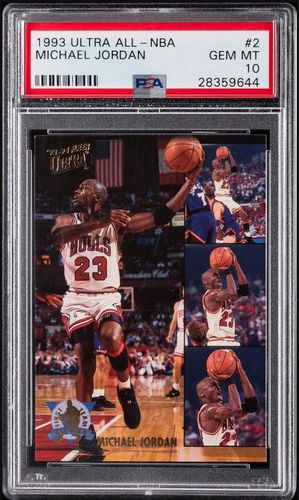
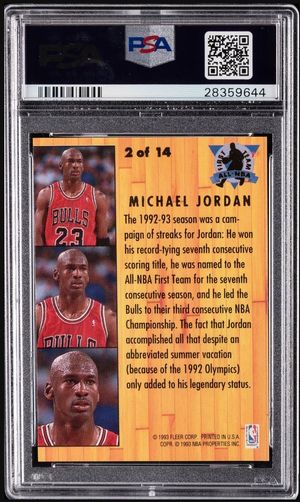
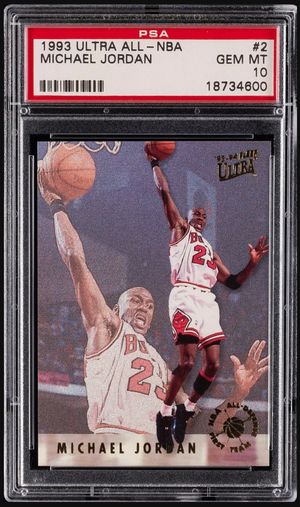
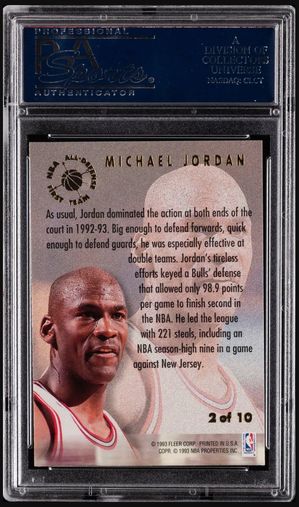
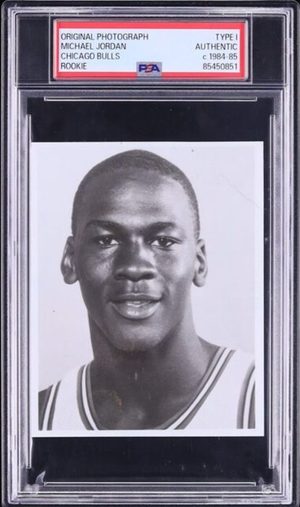
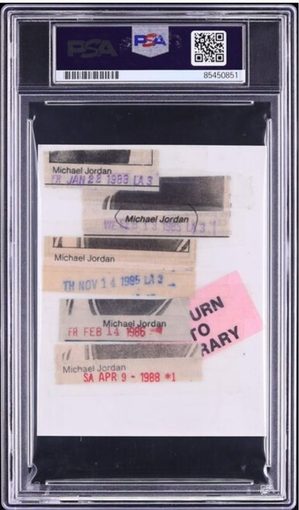
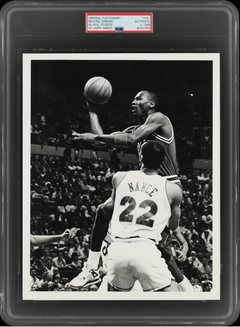
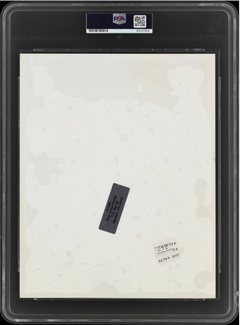
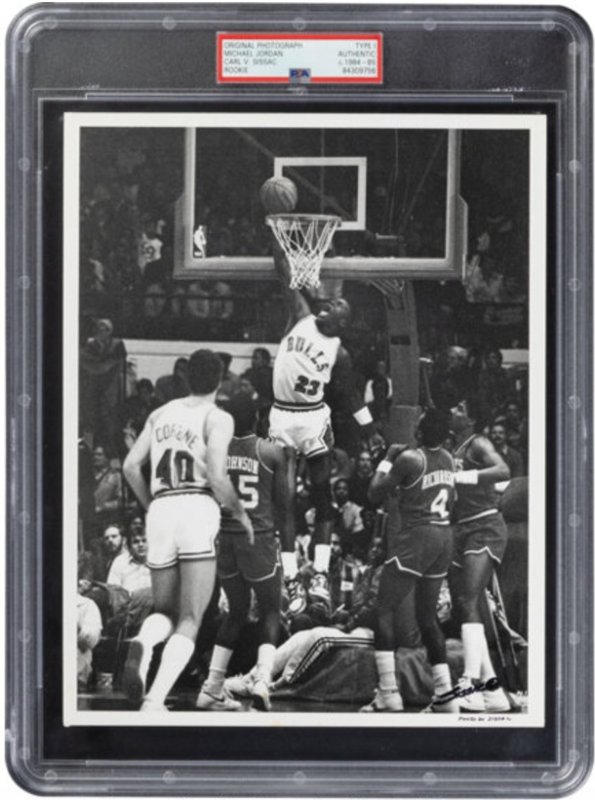
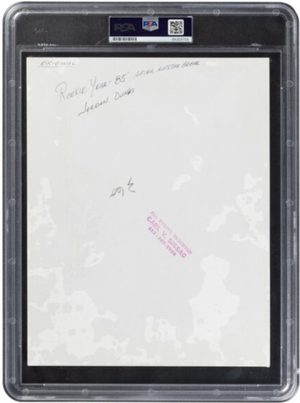
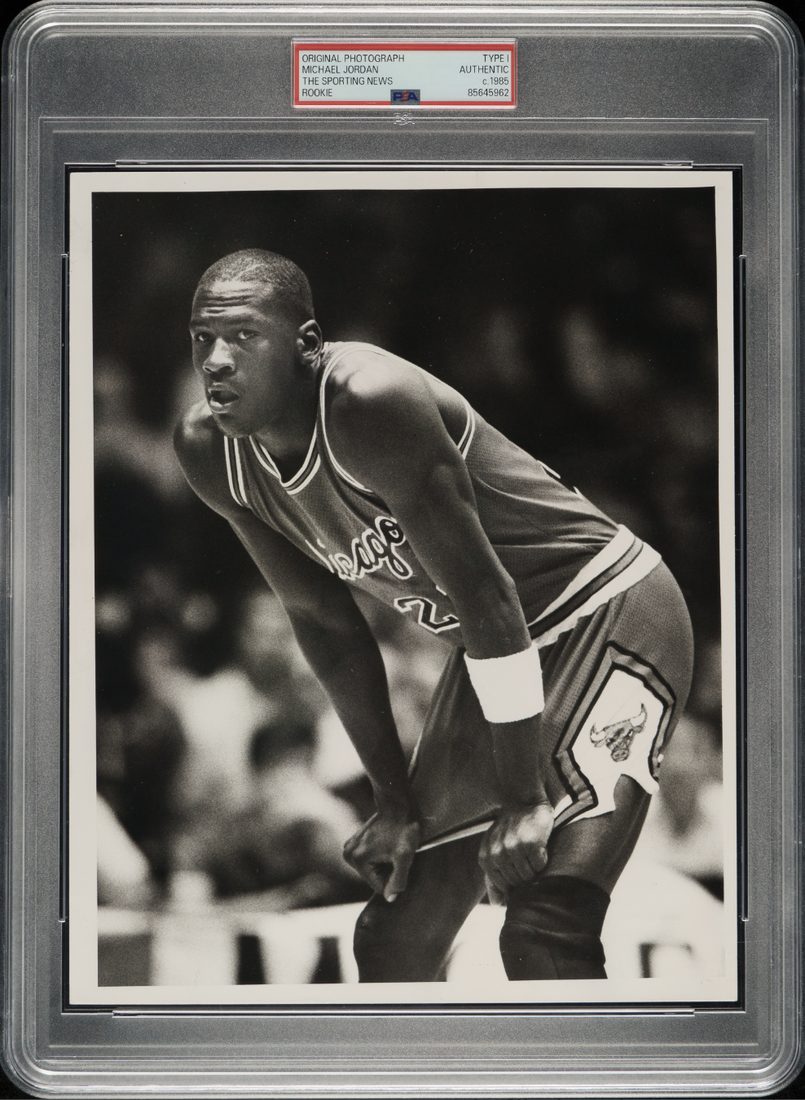
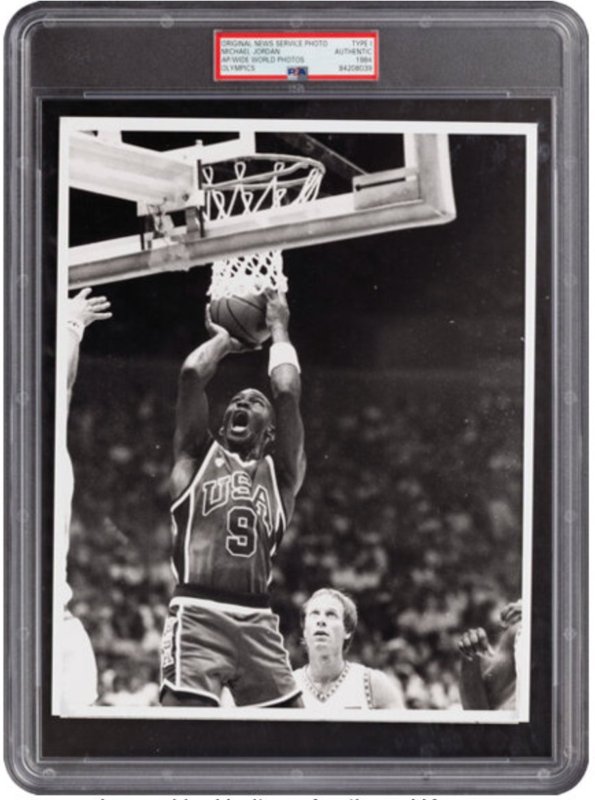
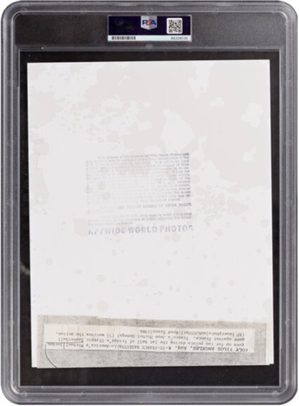
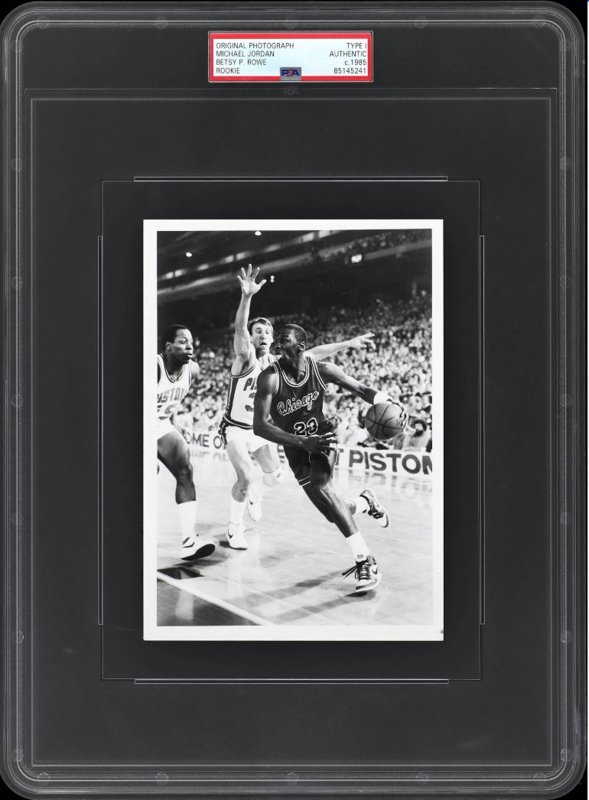
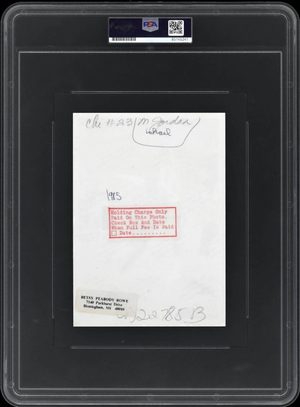
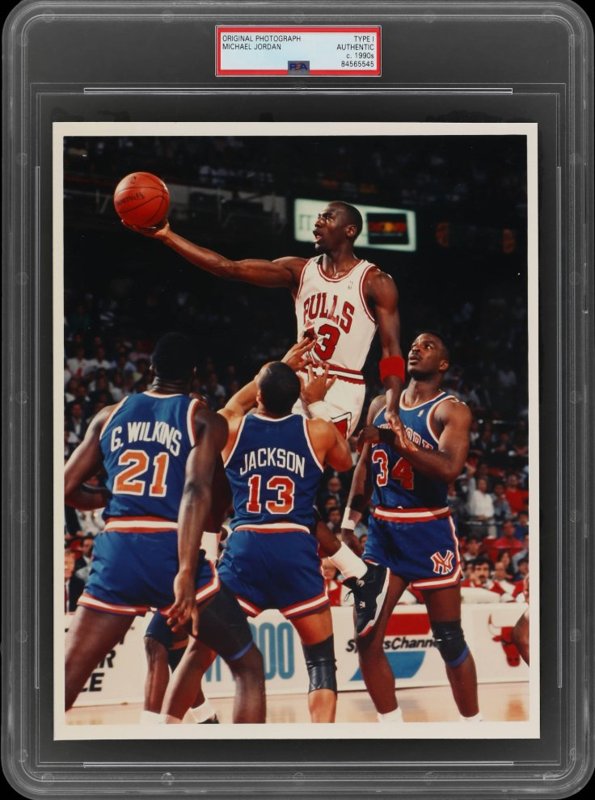
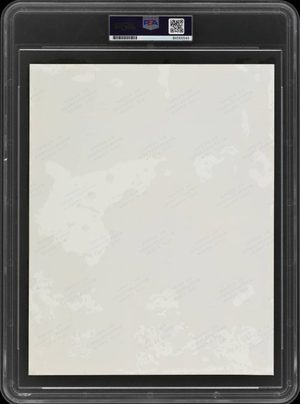
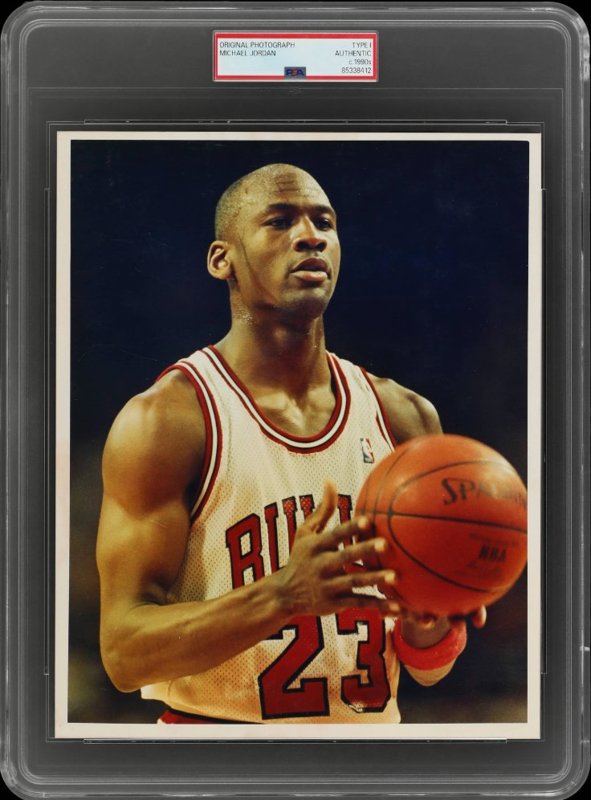
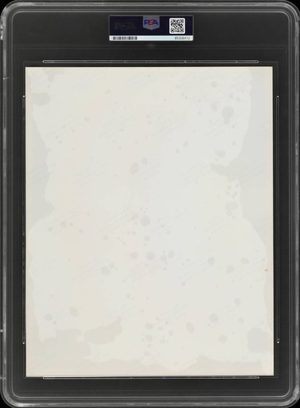
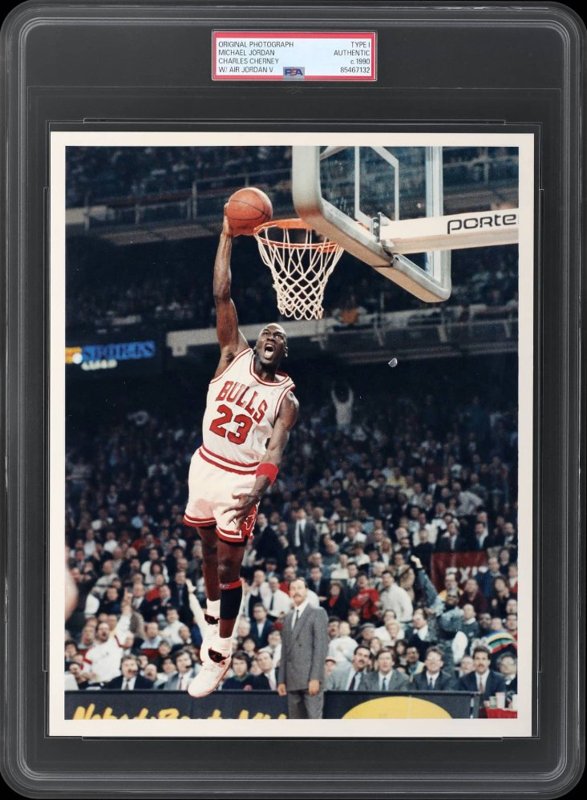
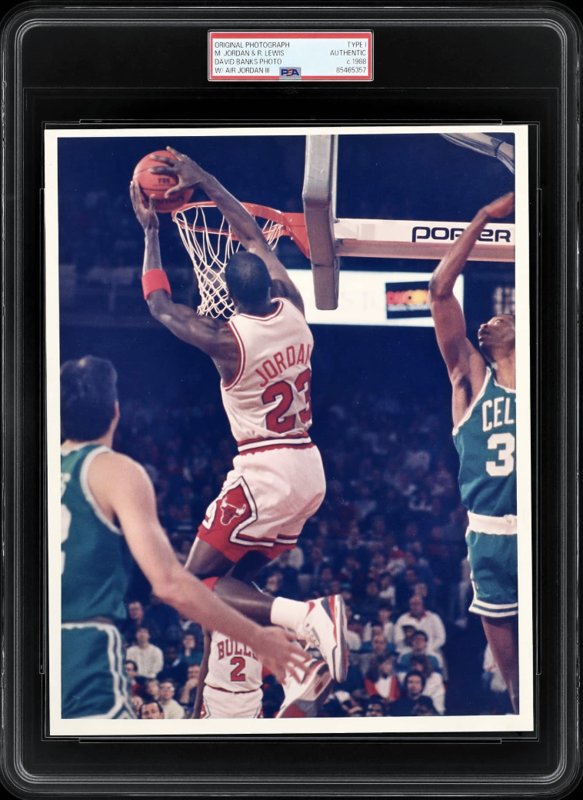
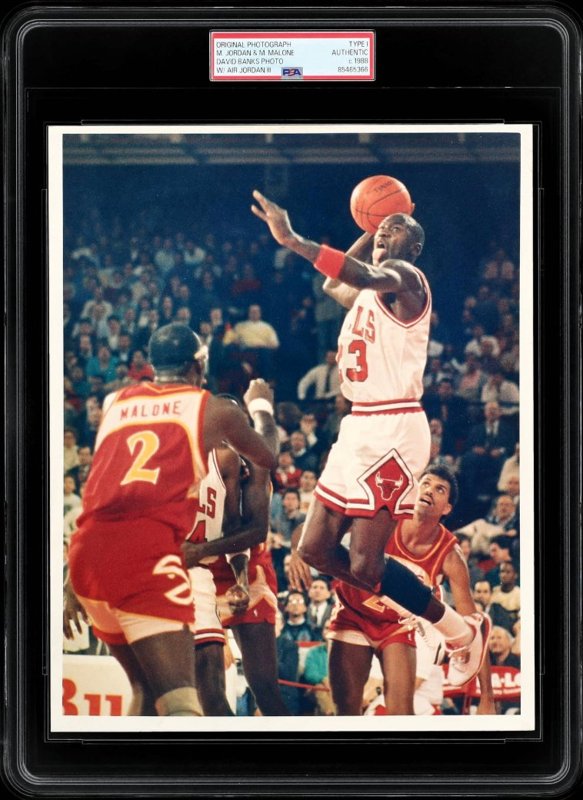
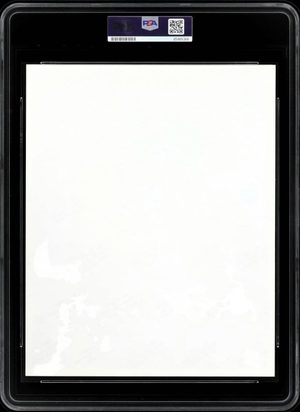
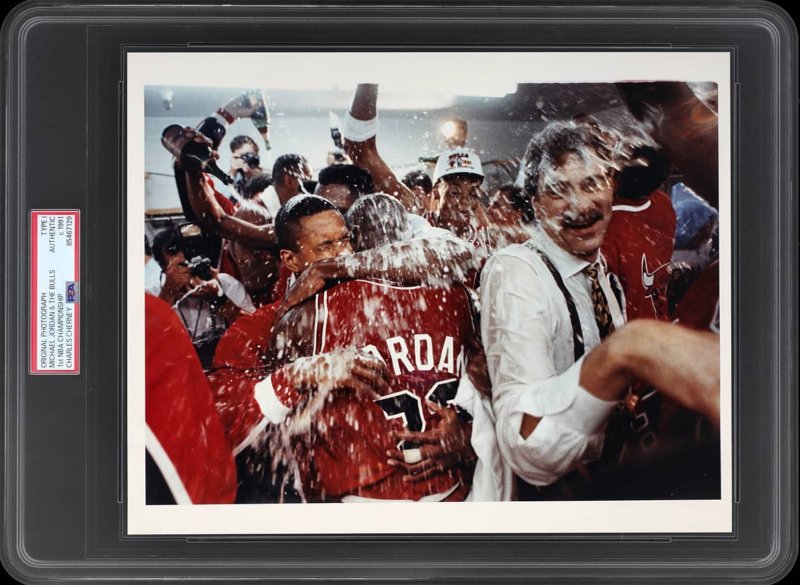
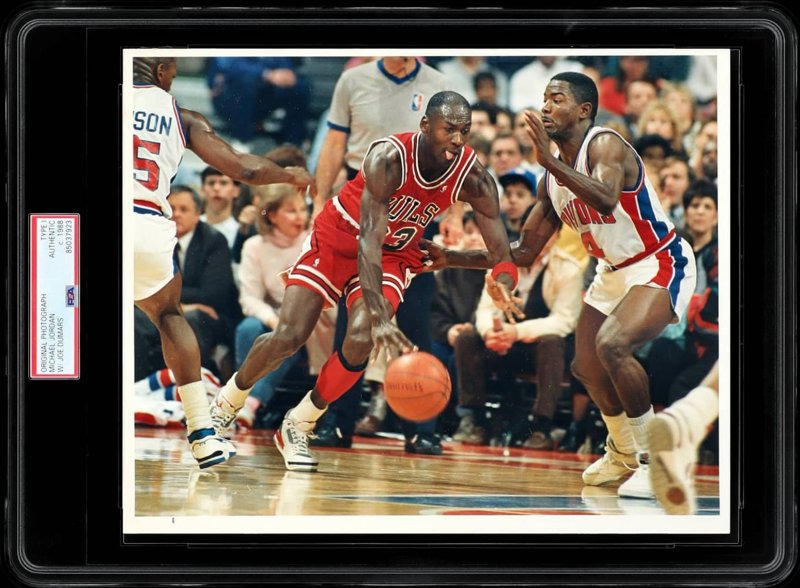
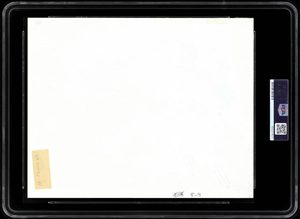
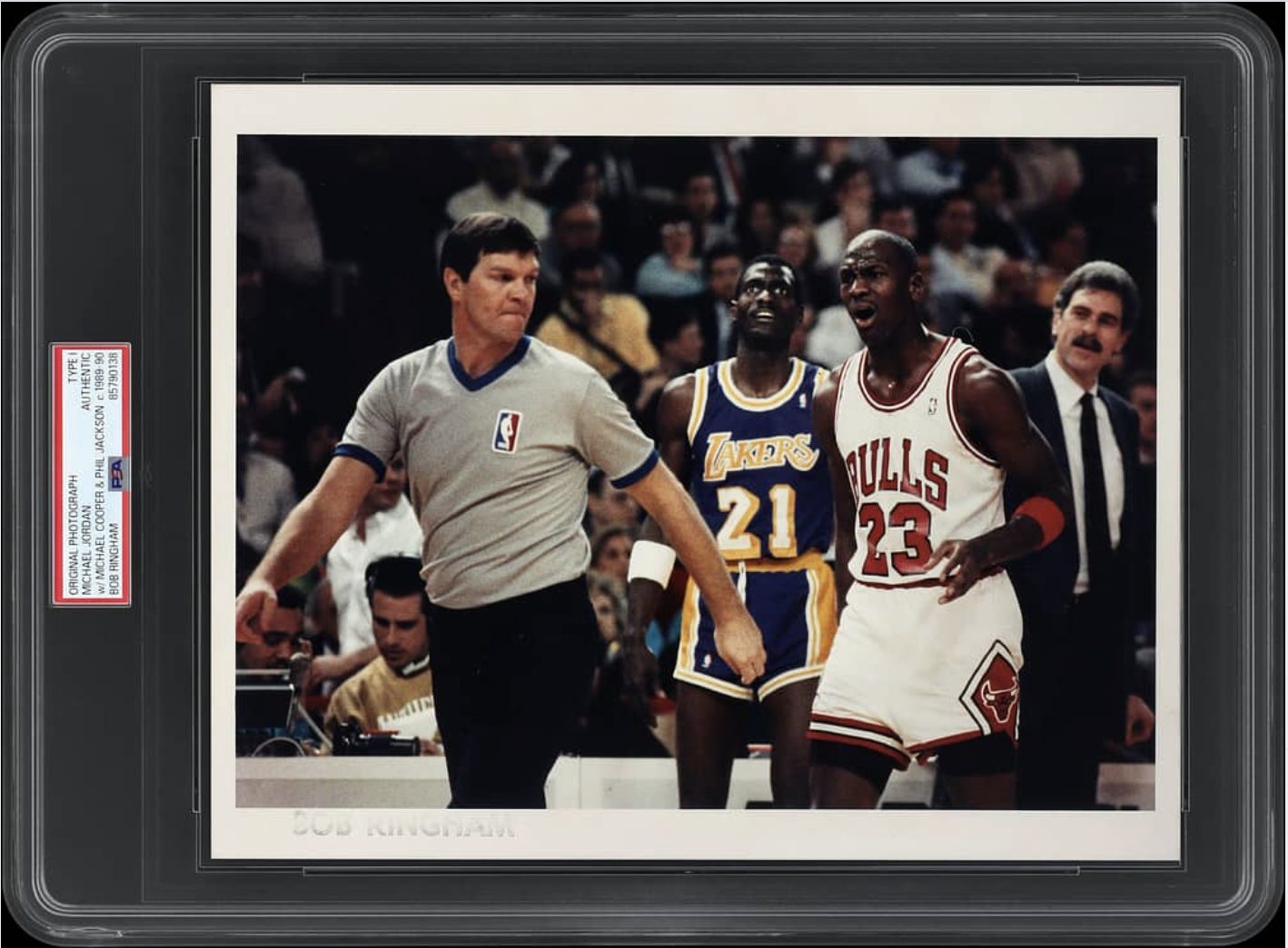
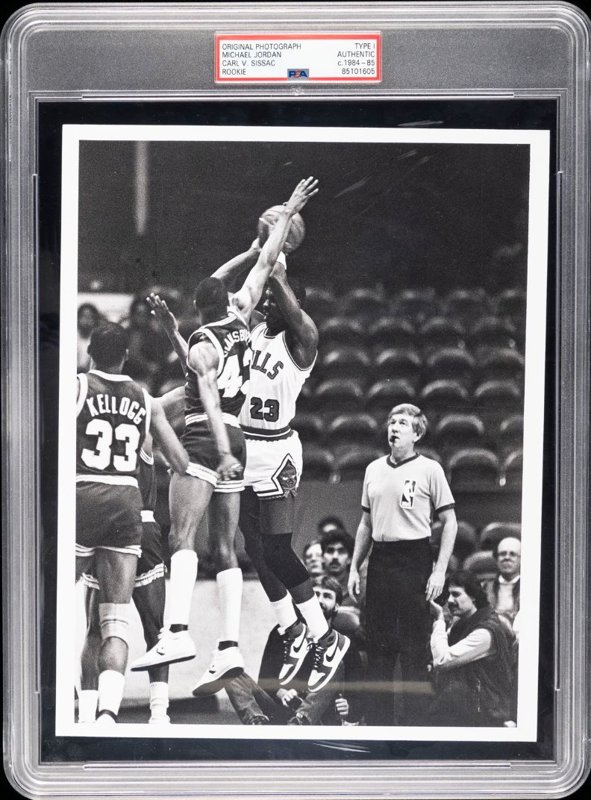
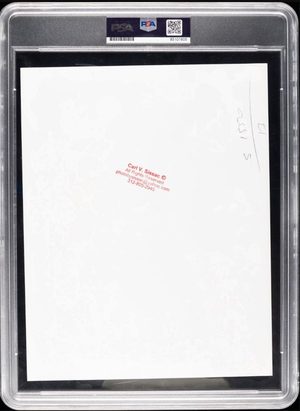
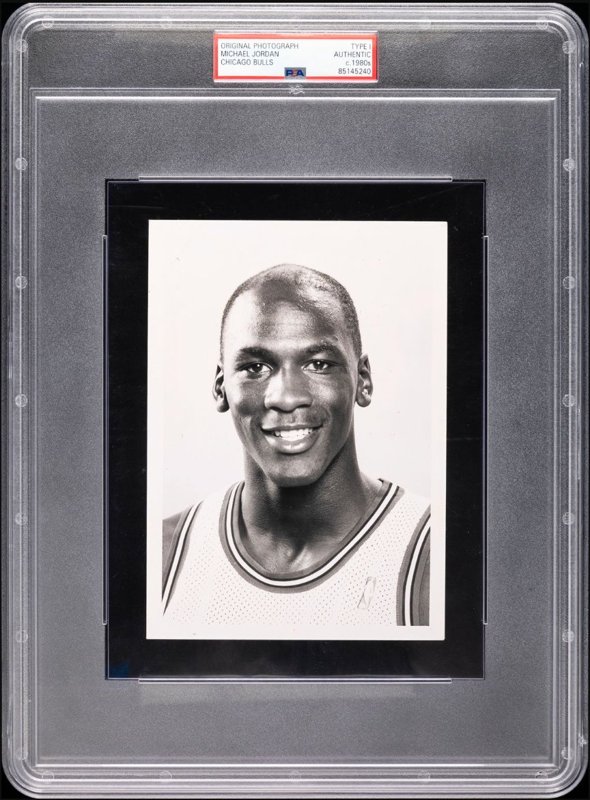
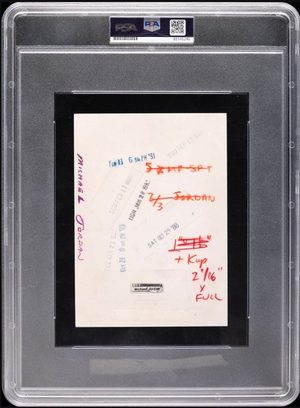
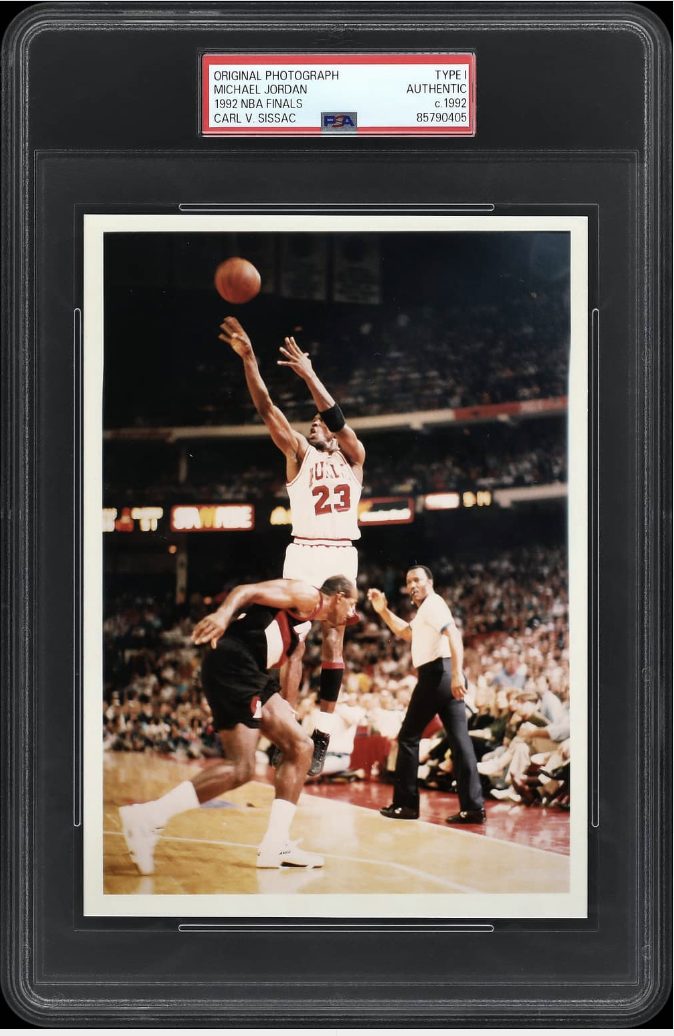
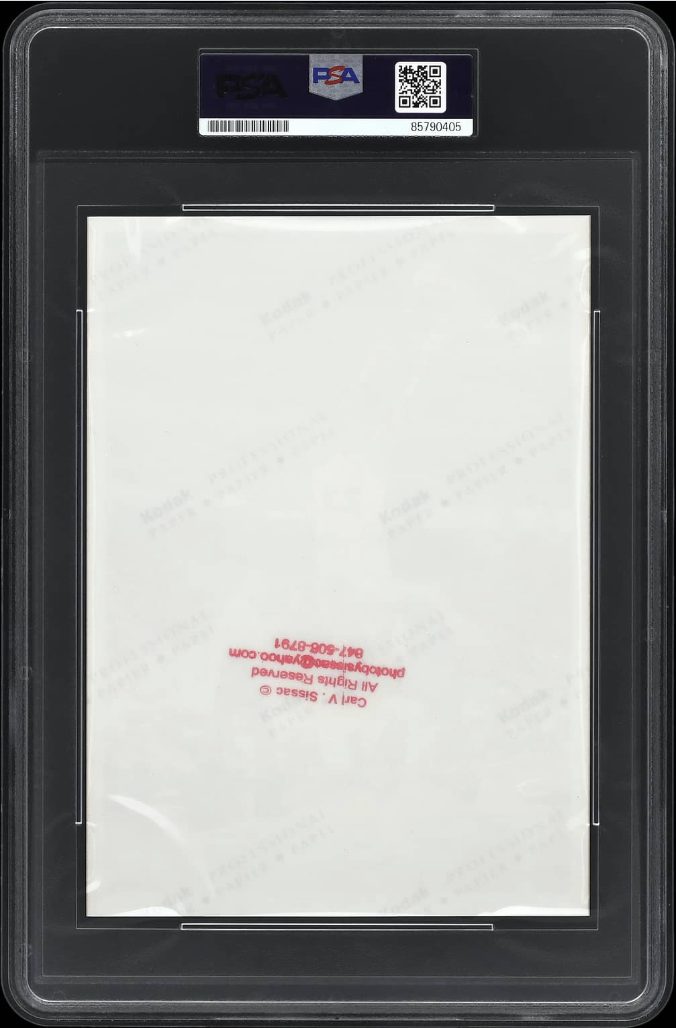
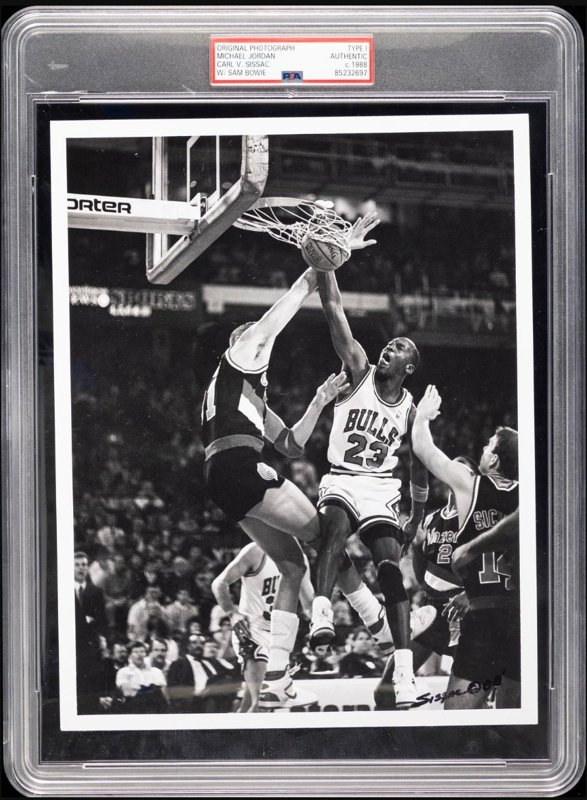
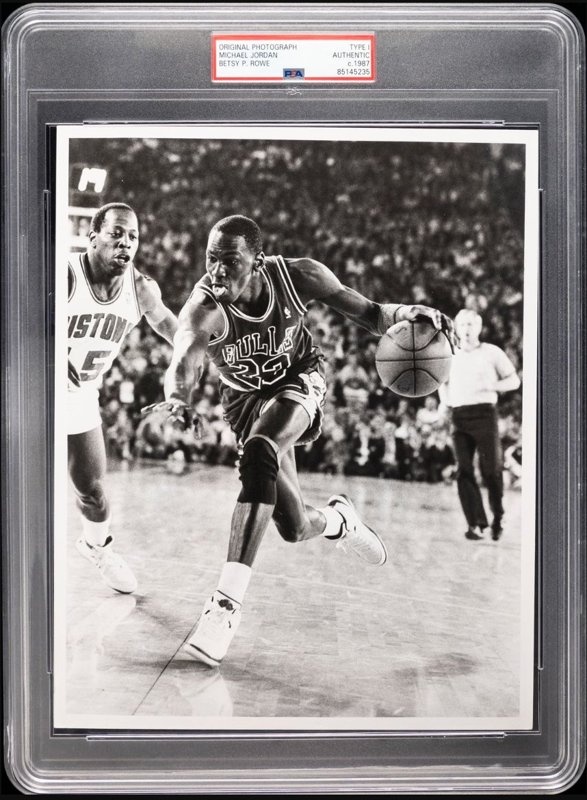
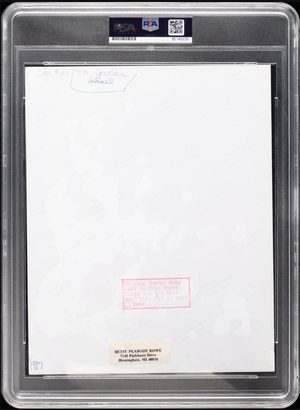
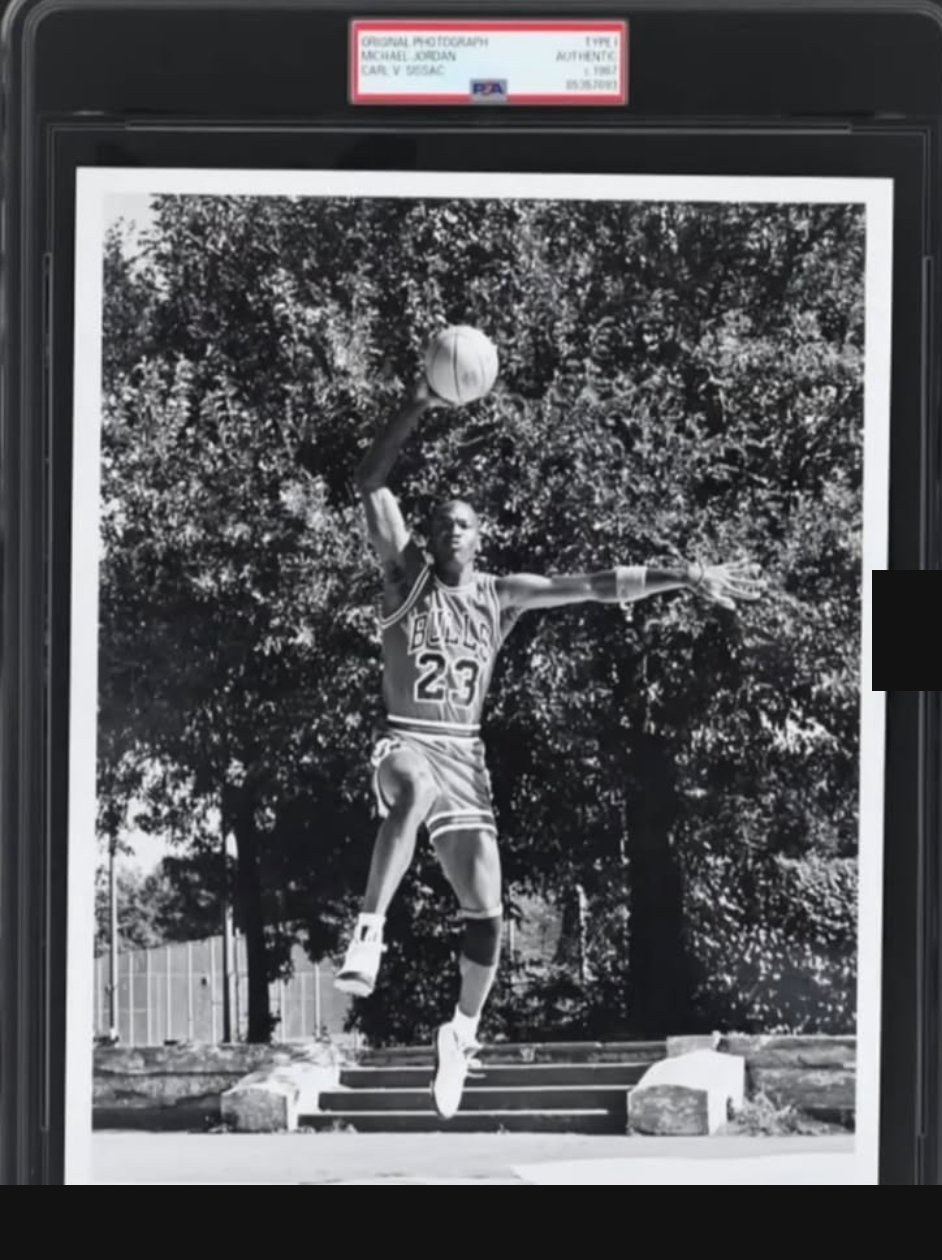
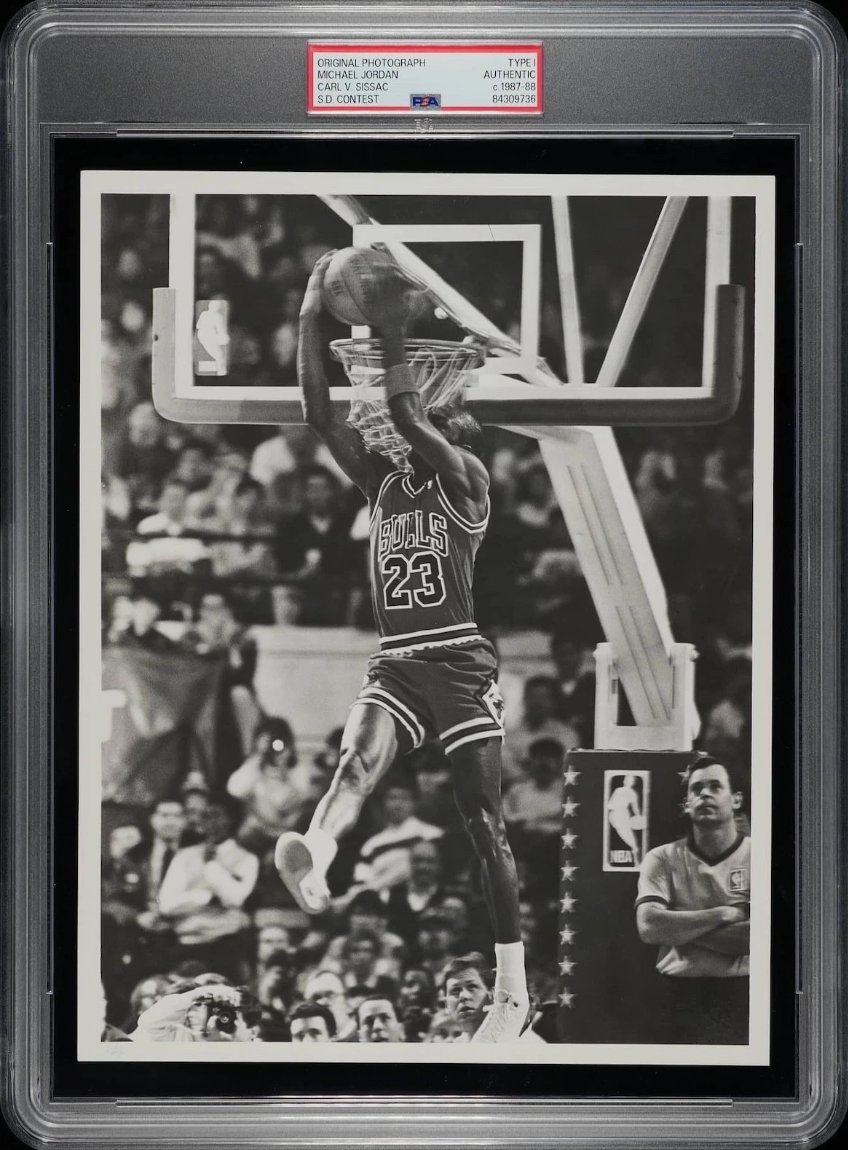
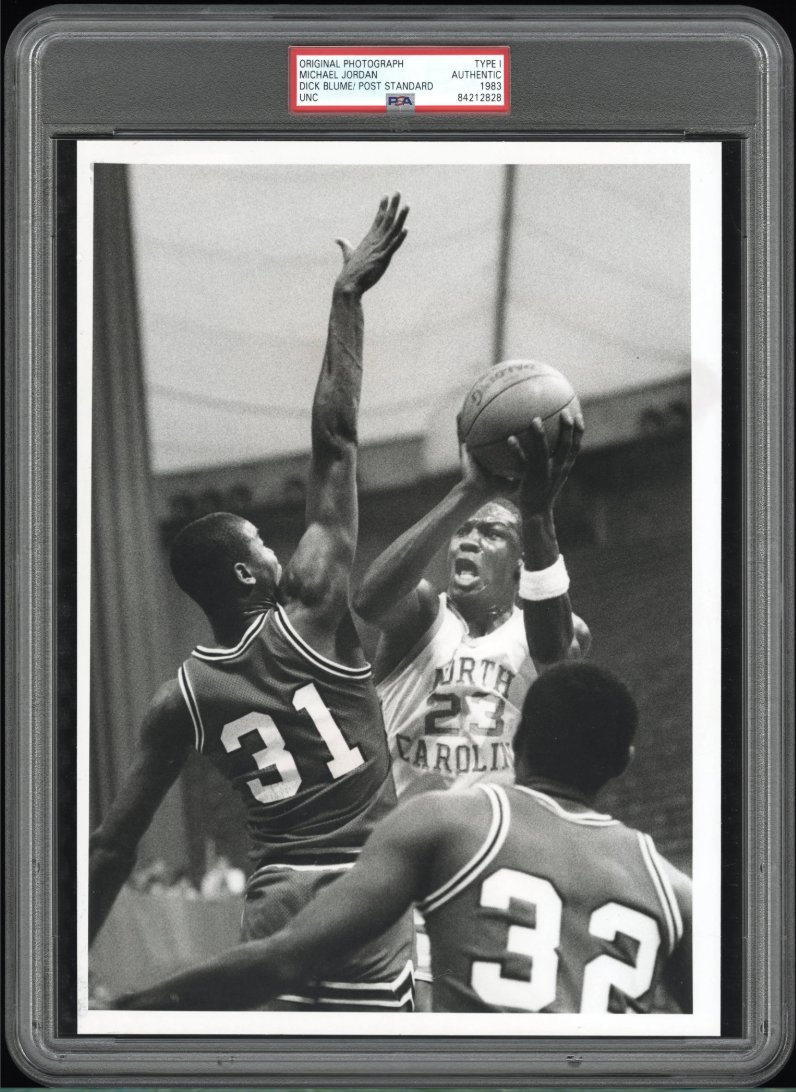
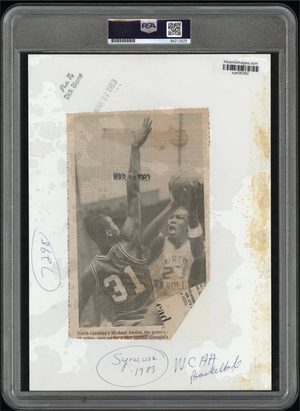
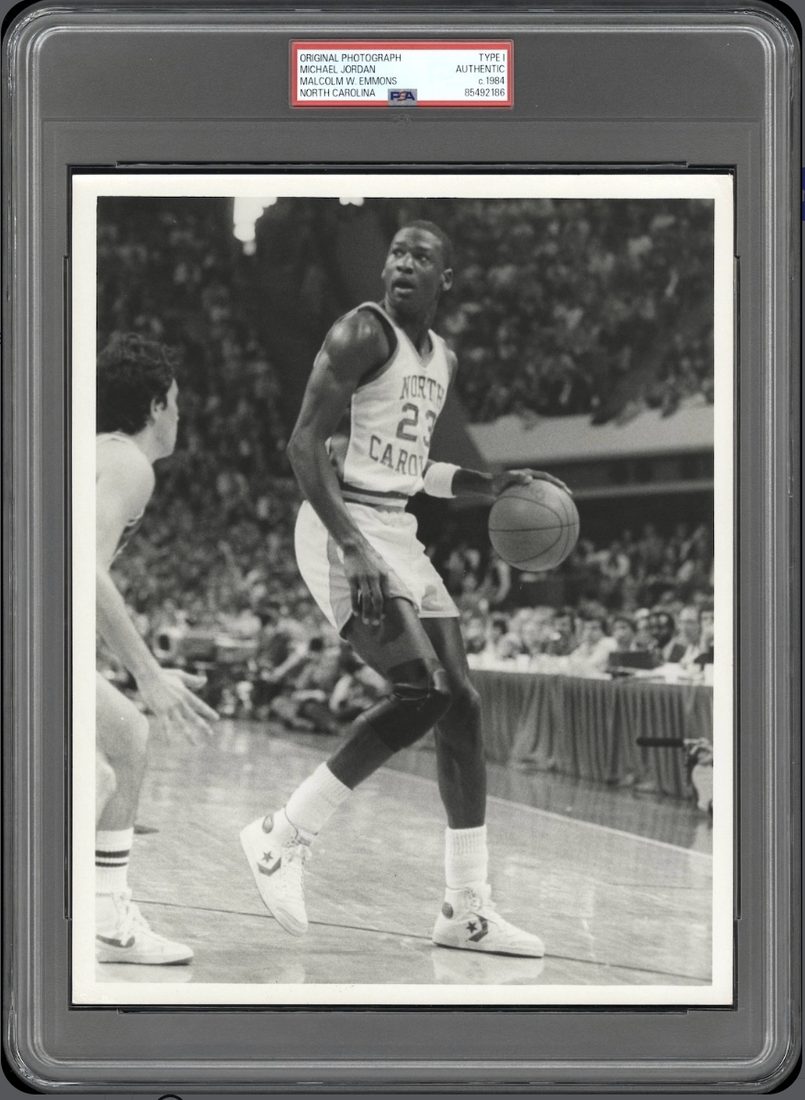
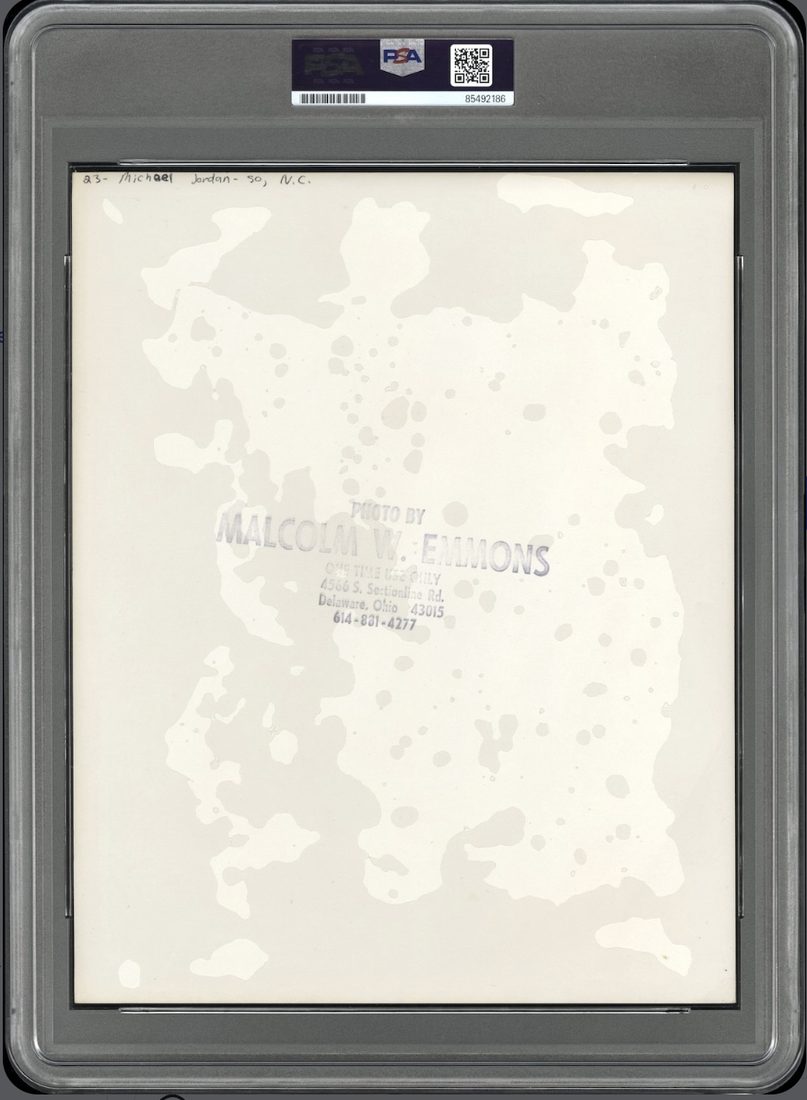
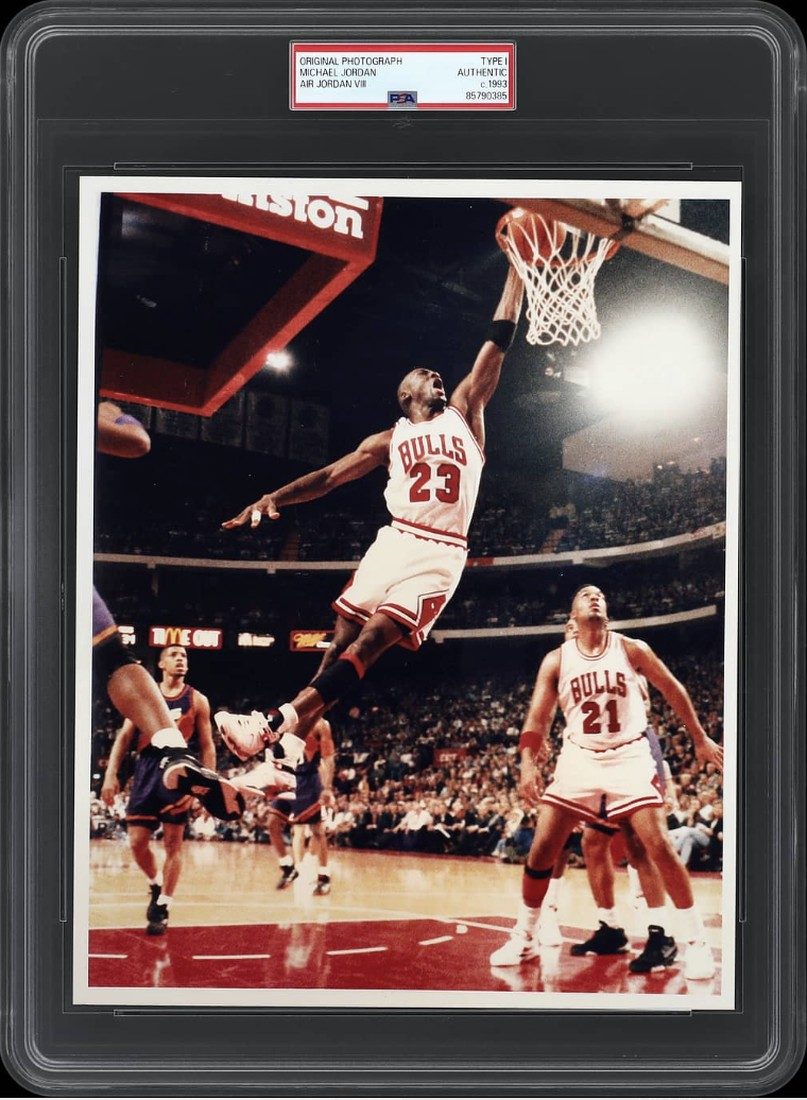
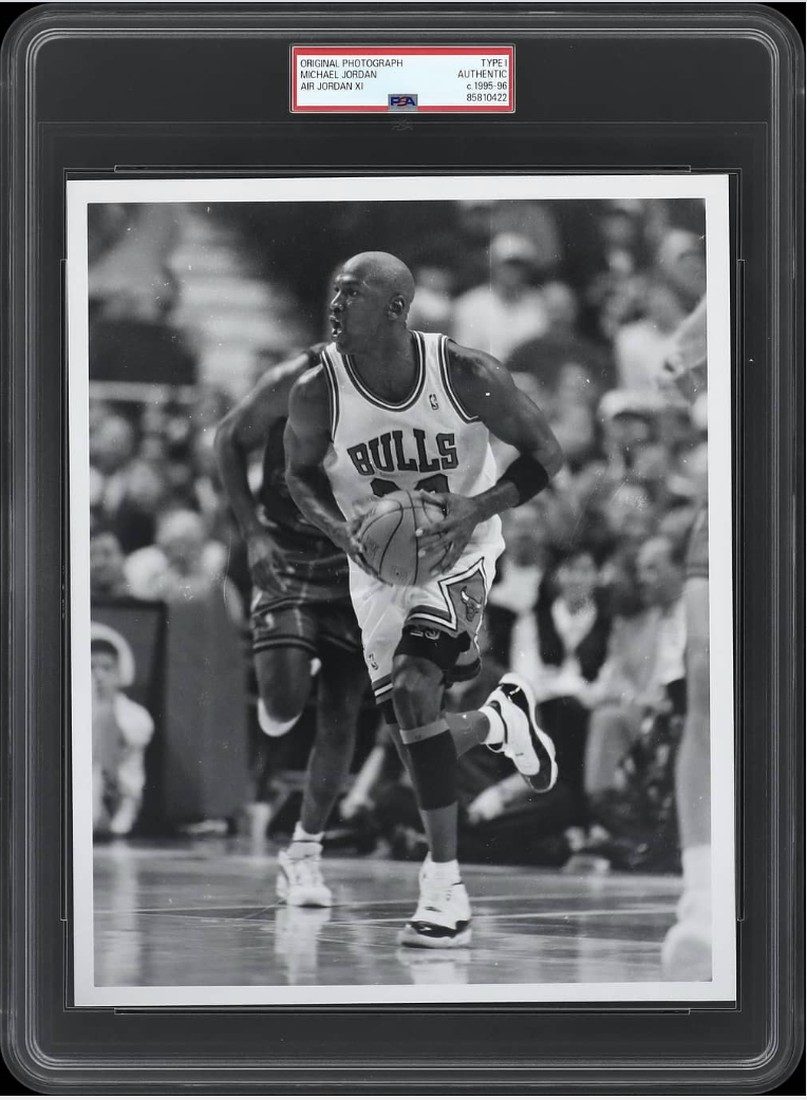
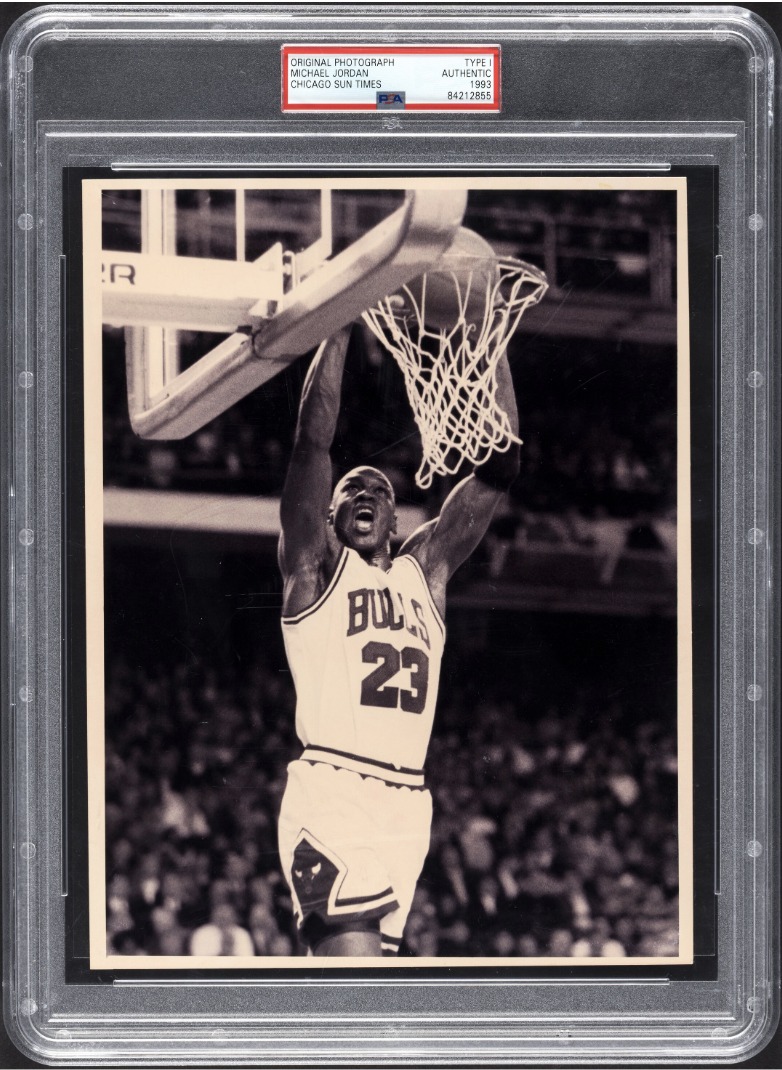
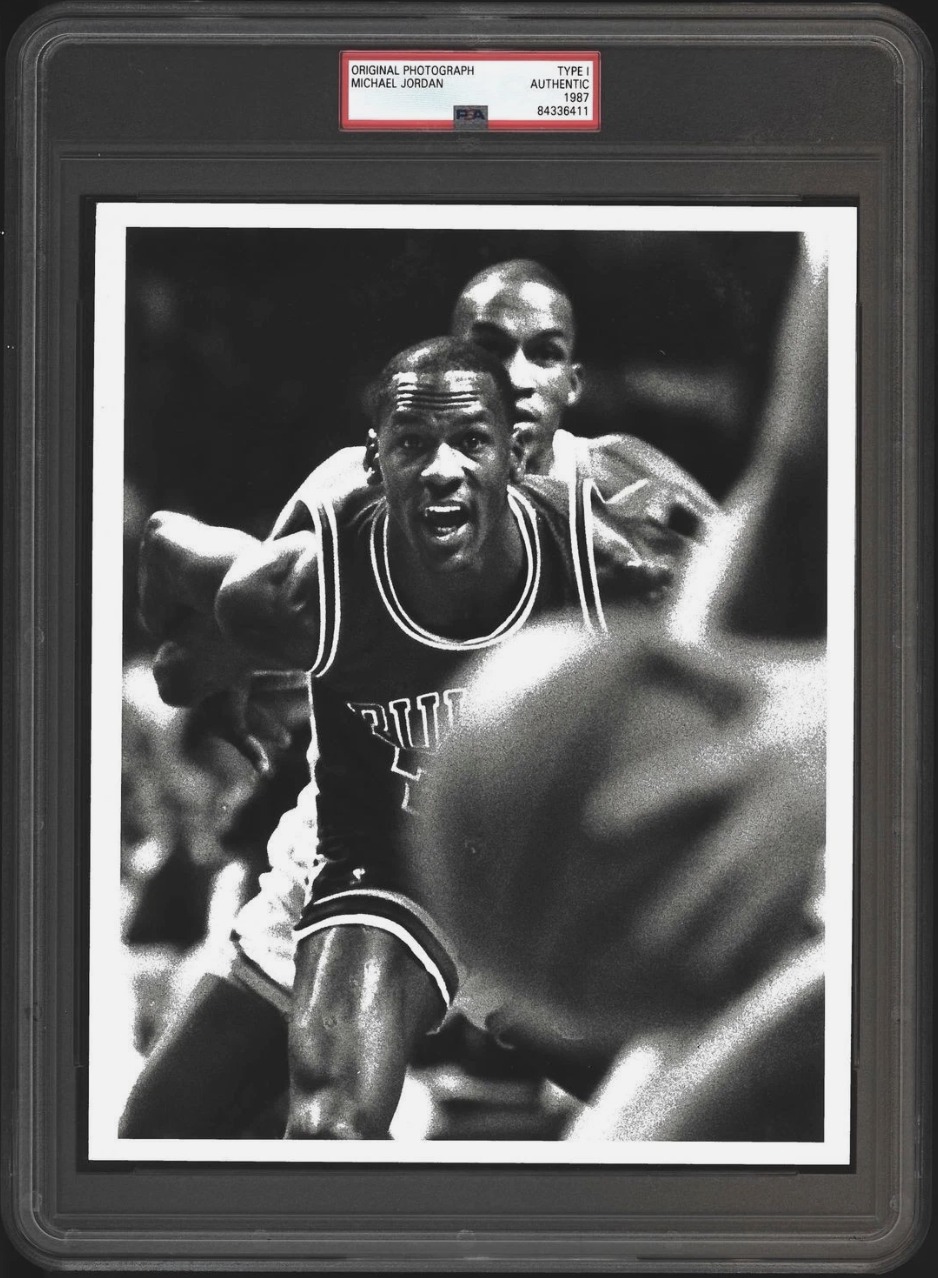
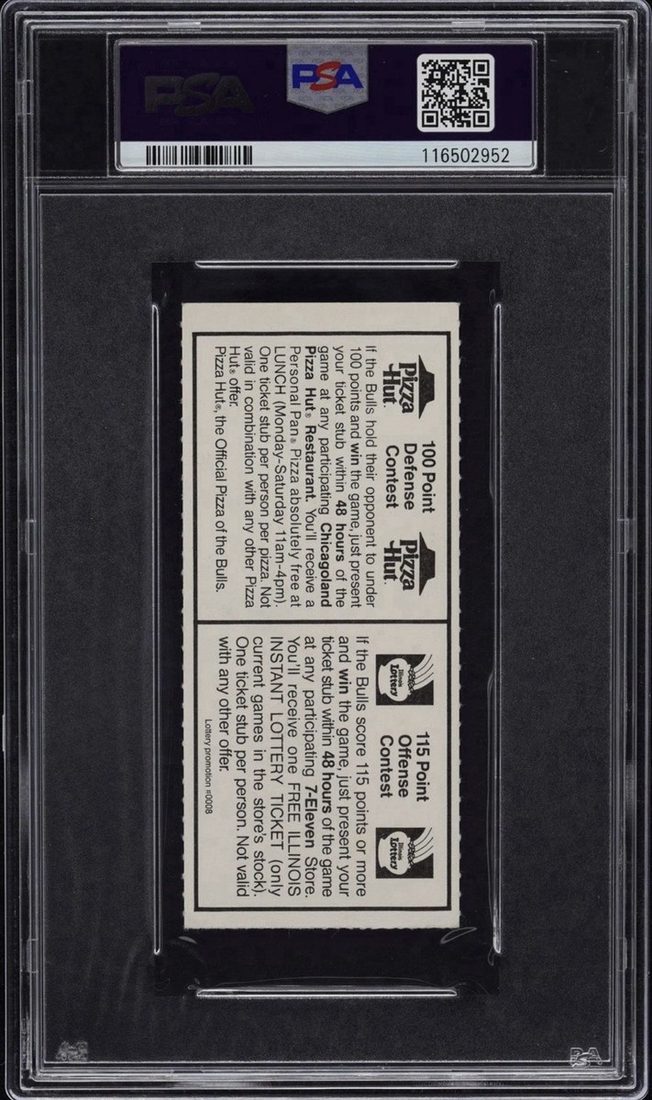
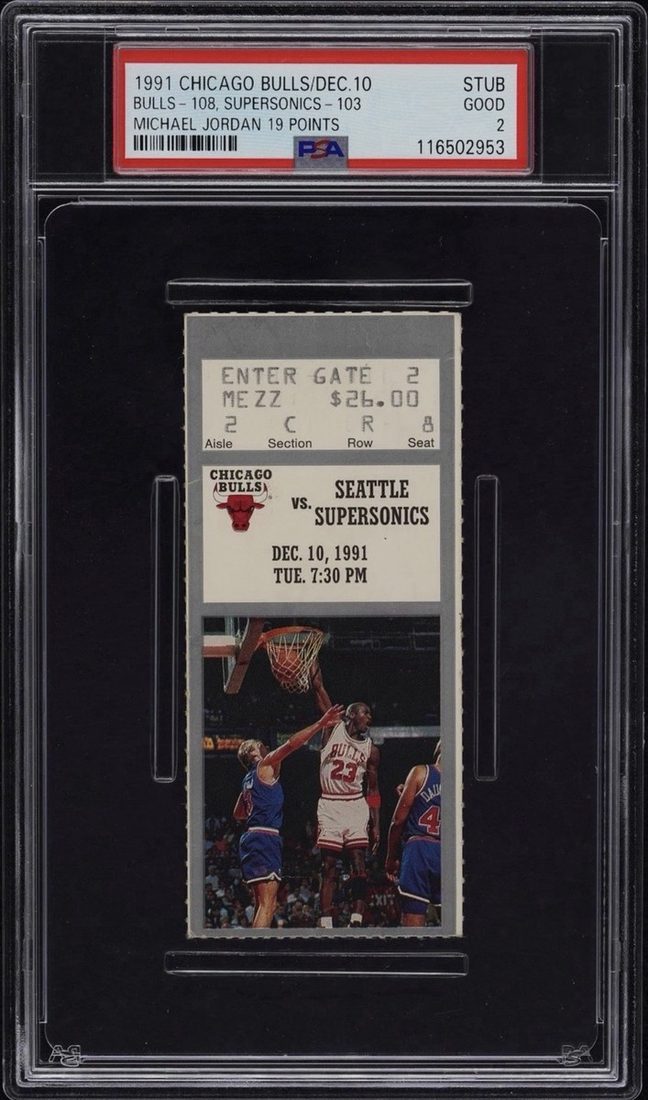
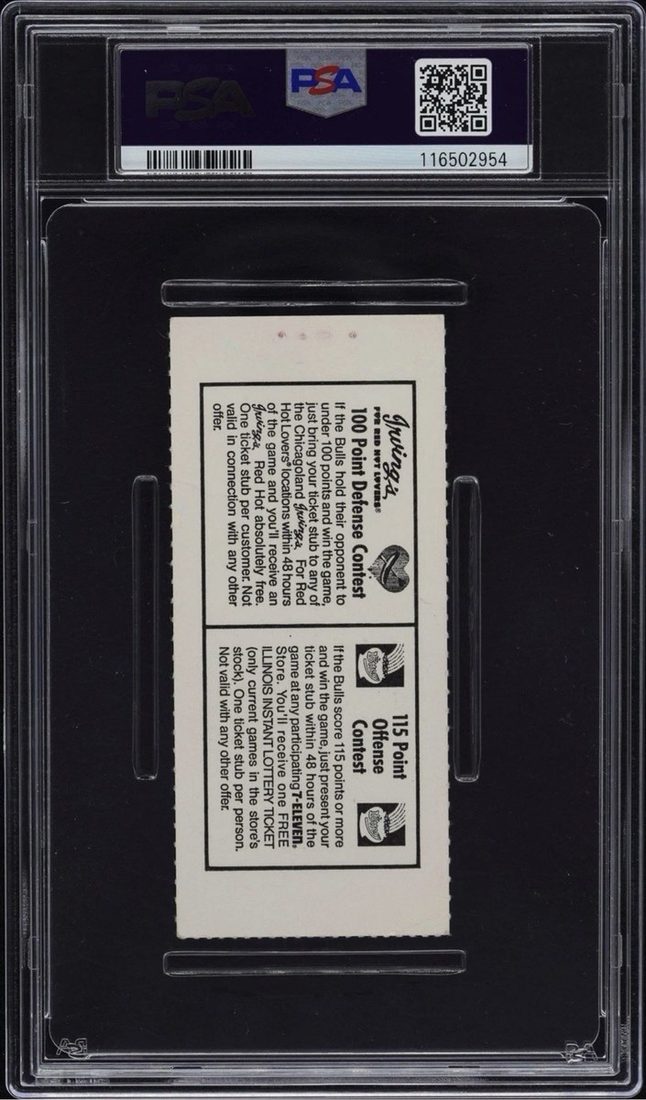
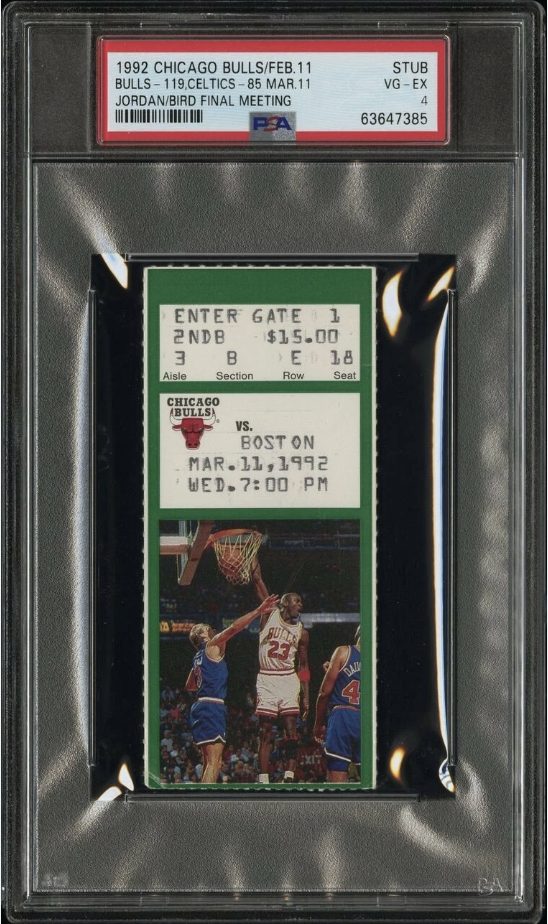
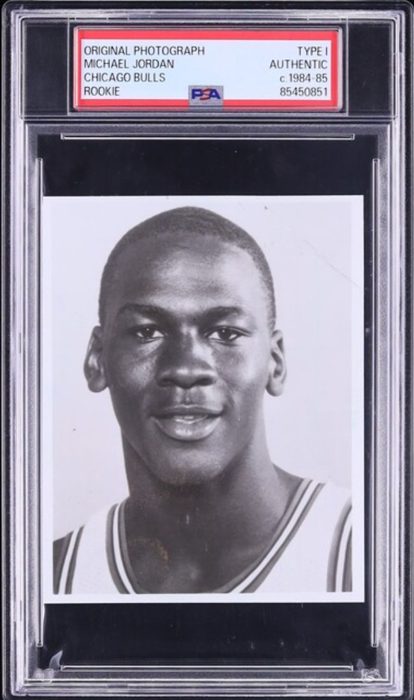
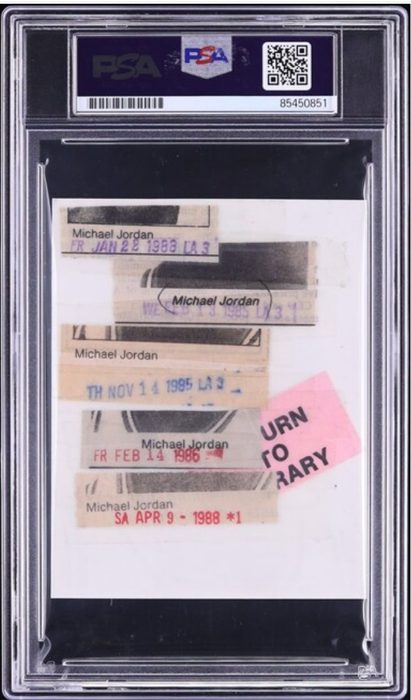
The photograph on the left is a 4" × 3.5" gelatin silver glossy press print of Michael Jordan — Chicago Bulls starting guard, 1984–85 rookie season. Shot during his first year in the league, this is the kind of image that ran in sports sections across the country before anyone knew what Michael Jordan was going to become. On the right is the back of that same print.
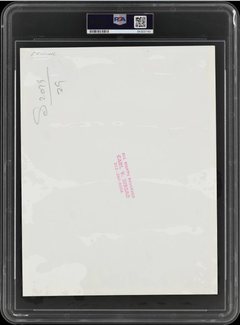
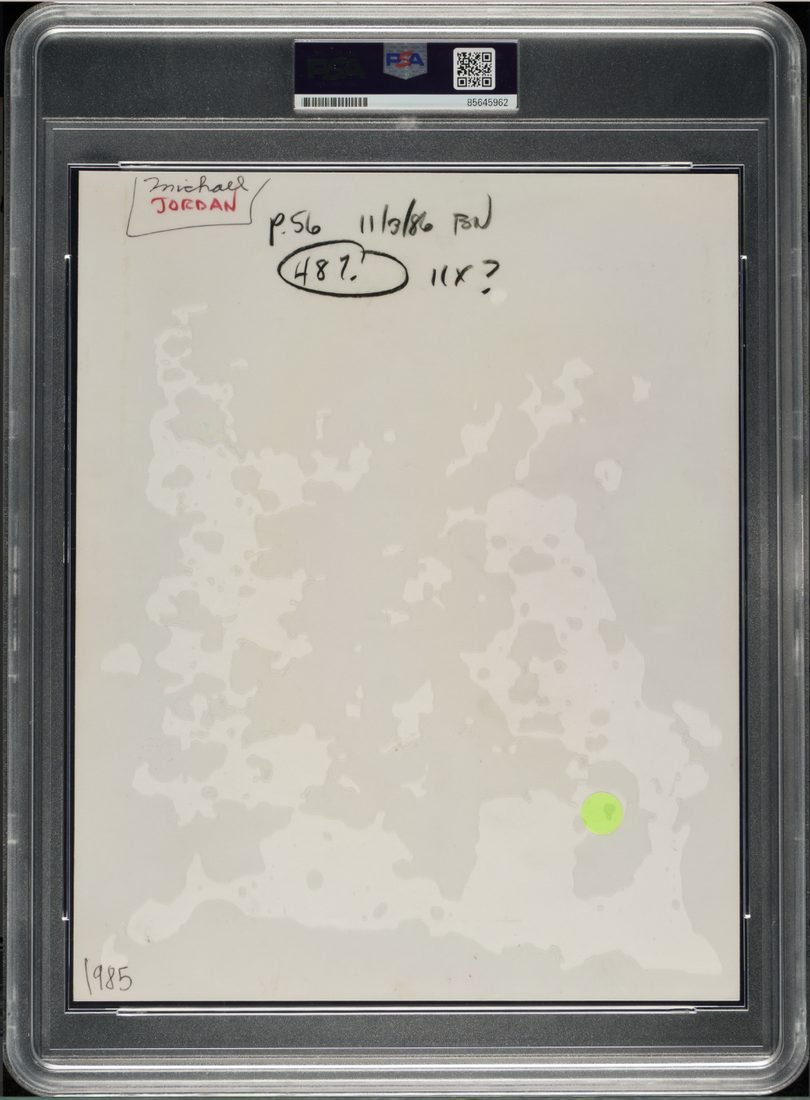
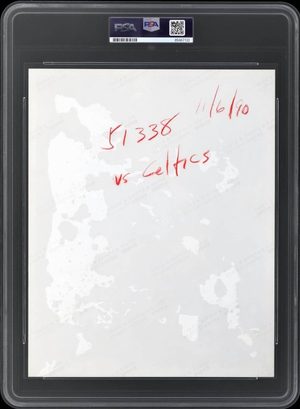
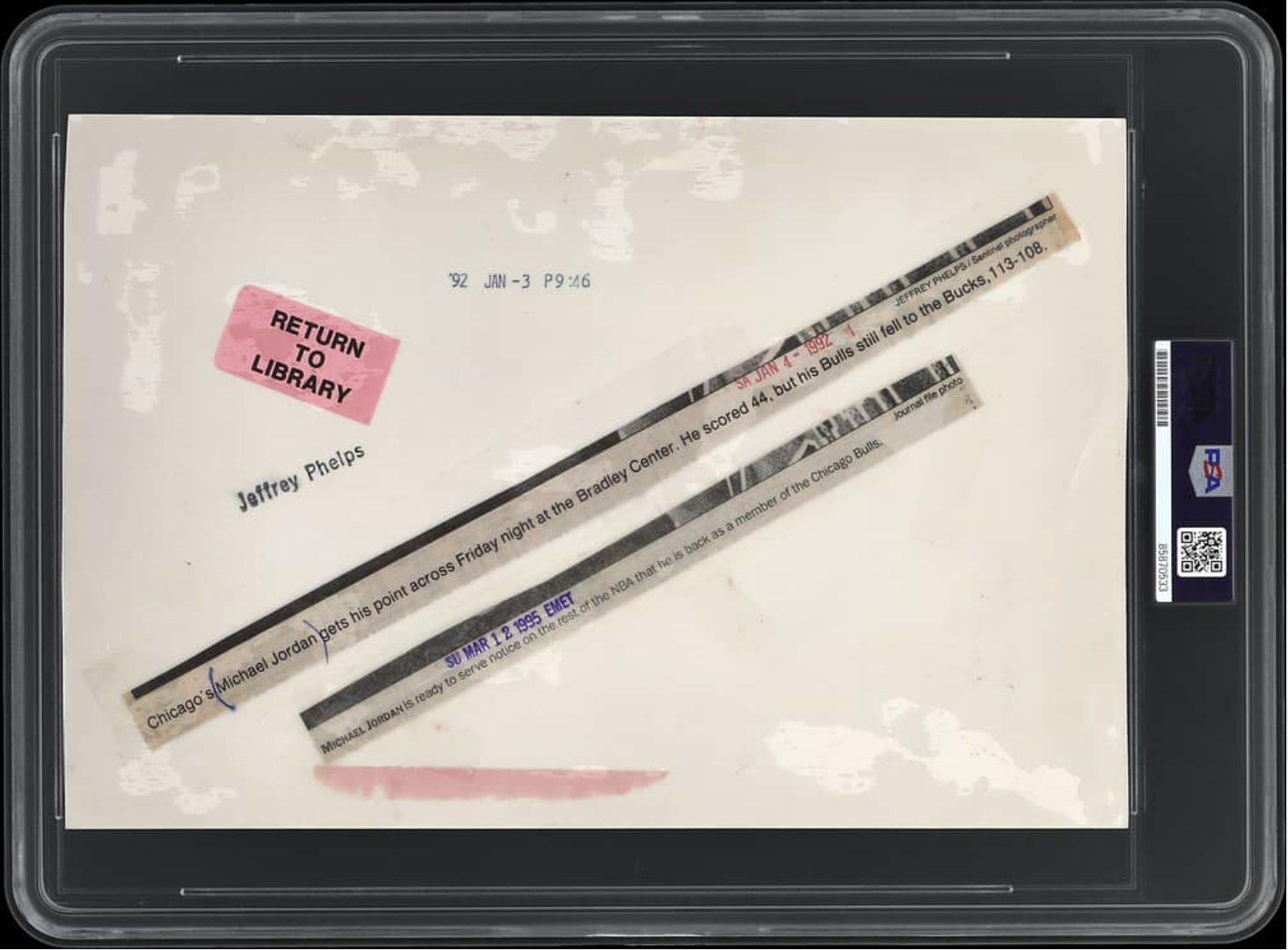
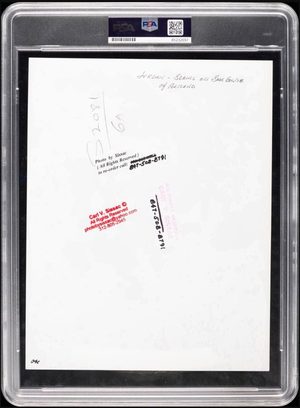
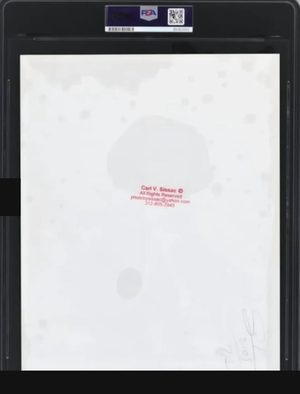
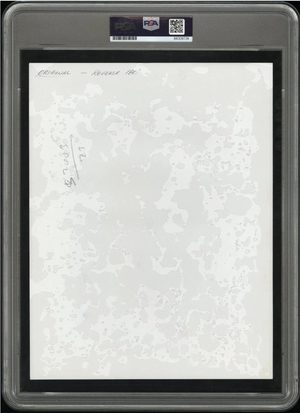
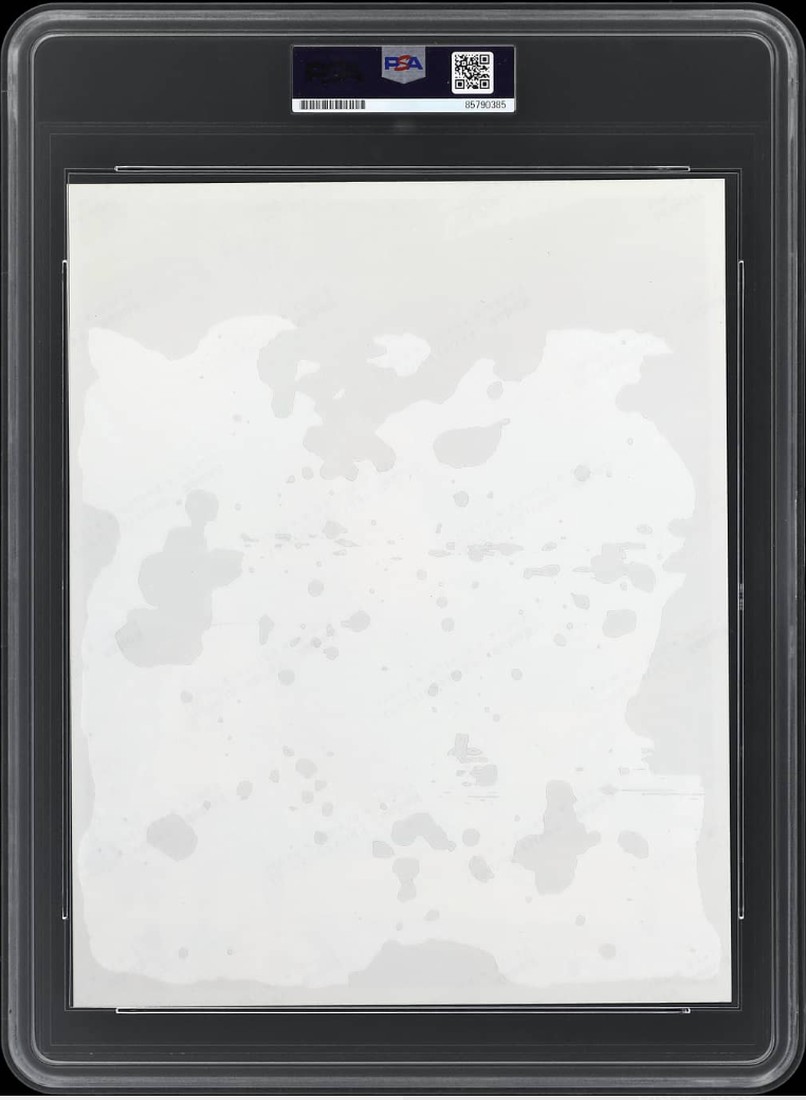
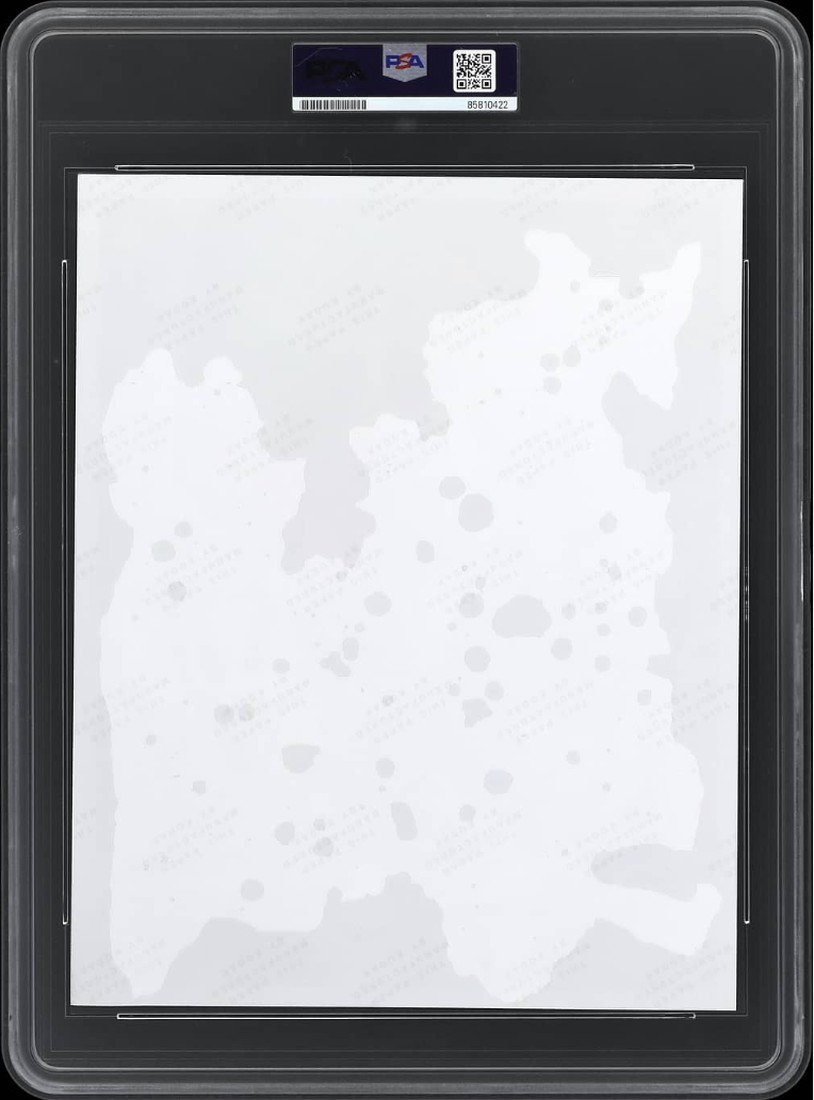
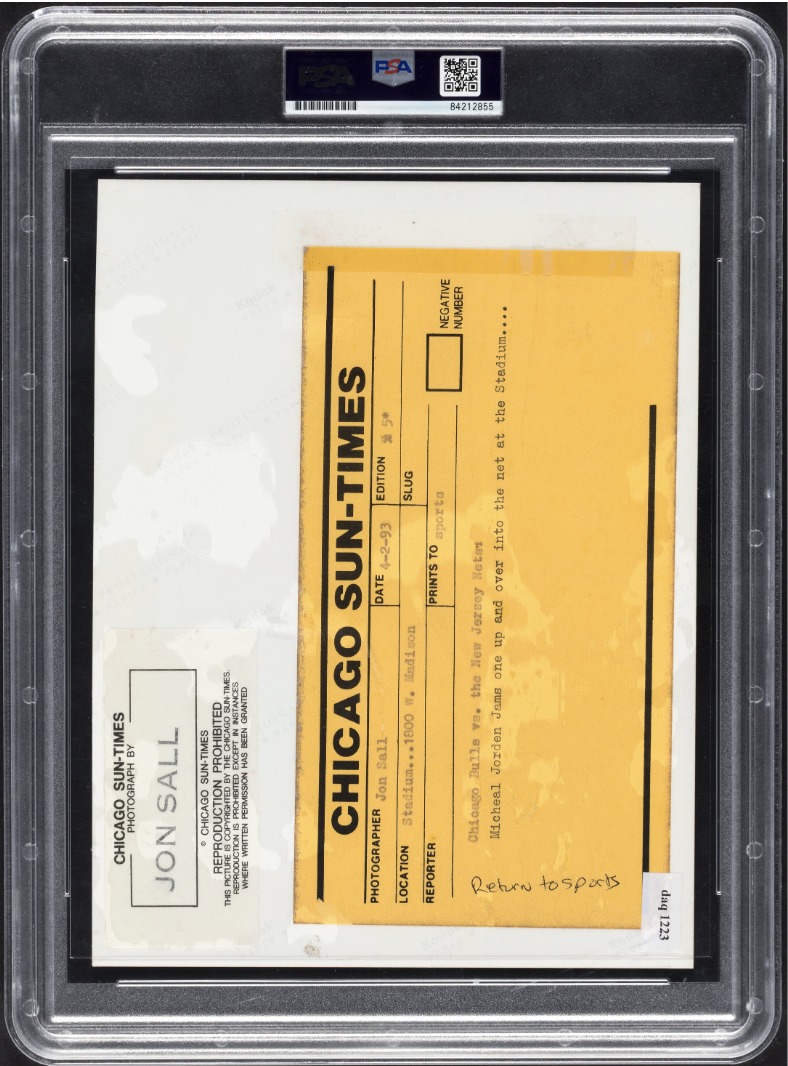
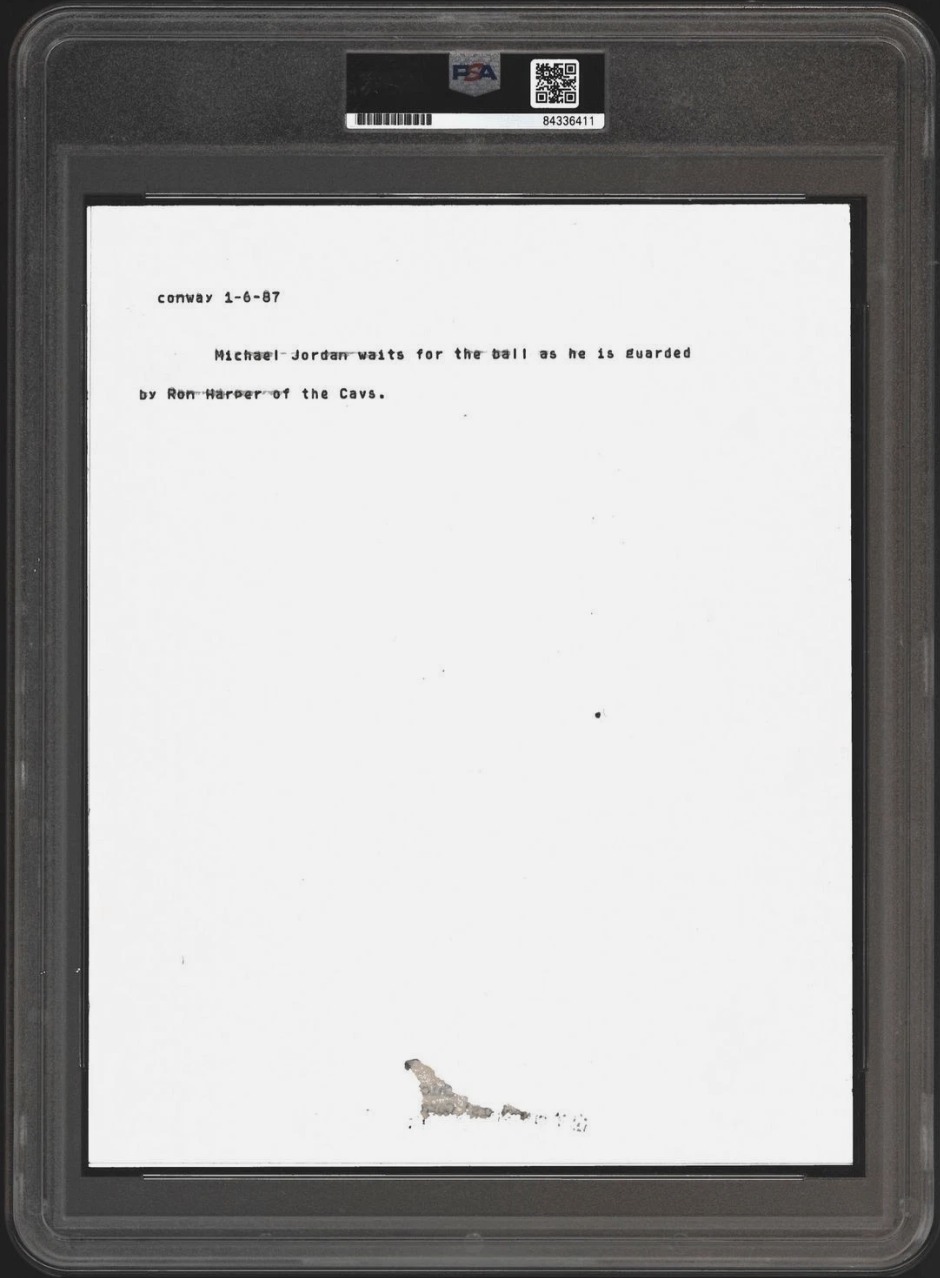
Now look at the back. Date stamps running from February 1985 through April 1988. The name Michael Jordan typed on adhesive labels, each one placed by a library staffer to ensure the print was filed correctly after each return. Newspaper clipping inserts marking every loan. And in the corner — a pink slip: RETURN TO LIBRARY.
That pink slip is not damage. It is documentation. It is the reason this photograph is worth far more than any reproduction of the same image. It tells you exactly what this object was, how it moved through the world, and why no other copy of it exists in this condition with this history.
What is a Type 1 photograph?
In the world of vintage photography, prints are classified by their generation. A Type 1 is the first print made from the original negative — produced at or near the time the photograph was taken, by the photographer or their lab. Not a reprint. Not a scan. Not a licensed reproduction. The actual physical object that existed in the world the moment it was made.
Types 2, 3, and 4 are later generation prints — reproductions made from the original or from copies of the original at various removes. They may look identical to an untrained eye. But they are not the same object. The provenance chain is broken. The story on the back is absent or incomplete. And the value — to a serious collector — is categorically different.
For sports photography in the pre-digital era, Type 1 prints were wire service photographs distributed by agencies like AP, UPI, and Getty. A sports editor who needed a photo of Michael Jordan for Tuesday's edition would contact a photo library, request a print, receive it physically in the mail, use it for publication, and return the original — usually with stamps or inserts documenting the loan.
Type 1
First print from original negative · Made at time of photograph
Authentication
PSA verifies originality · No population report — absolute scarcity
Provenance
Stamps, clipping inserts, and return slips document full chain of custody
The library system — how photographs moved through the world
Wire service photo libraries operated like a lending system for images. Photographers would shoot events, develop prints in darkrooms, and file them in physical archives organized by subject — team, player, date. Michael Jordan had his own file before most people outside of Chicago had ever heard of him.
When a publication needed a Jordan image, they would call or wire the library, request a specific print, and receive the physical photograph. After publication, the original was returned — stamped with the date and often with a newspaper clipping insert identifying the subject. The pink RETURN TO LIBRARY slip was a standard library practice to ensure prints made it back.
The print shown here was borrowed at least five times across three years — beginning with a February 1985 loan when Jordan was still a rookie, and continuing through April 1988 when he was the most electrifying player in the league. Each stamp is a chapter. Each loan is a moment someone in publishing decided this photograph was worth using again.
"The back of this photograph was stamped, dated, and returned five times while Michael Jordan was still in his first four years in the NBA. Every mark on it is real history. The card market has PSA population reports. Type 1 photographs have something rarer — a paper trail."
— DimeLabs
1 of 1
Every Type 1 photograph is unique by definition. The specific stamps, dates, handwriting, and publication history on the back of any given print will never exist on another copy. Unlike graded cards with population counts, Type 1 scarcity is absolute — there is no census, no second copy, no comparable.
What we look for — the DimeLabs acquisition criteria
Not every Type 1 photograph is created equal. Within the category, there is a meaningful hierarchy of desirability — and most of the market hasn't yet developed the vocabulary to articulate it clearly. Here is what DimeLabs looks for when evaluating a Type 1 photograph of Michael Jordan.
The jersey matters
Jordan wore two distinct jersey styles in his early career that carry very different levels of significance to collectors. The most sought-after images are those from his rookie year and early seasons featuring the Chicago Bulls jersey with "Chicago" written in cursive script across the chest. This jersey style — worn during his breakthrough years — is historically and aesthetically distinct from the later "Bulls" block lettering that most casual fans associate with his championship era.
A Type 1 photograph that clearly shows the cursive Chicago jersey, in sharp focus, from the early 1980s is in a different category entirely from a later-era print. The jersey itself tells you when the photograph was taken and anchors it in the era that collectors value most.
Action beats portrait — but both matter
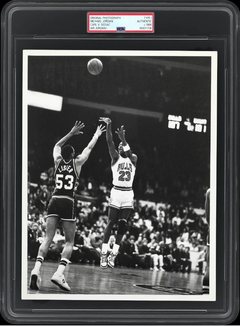
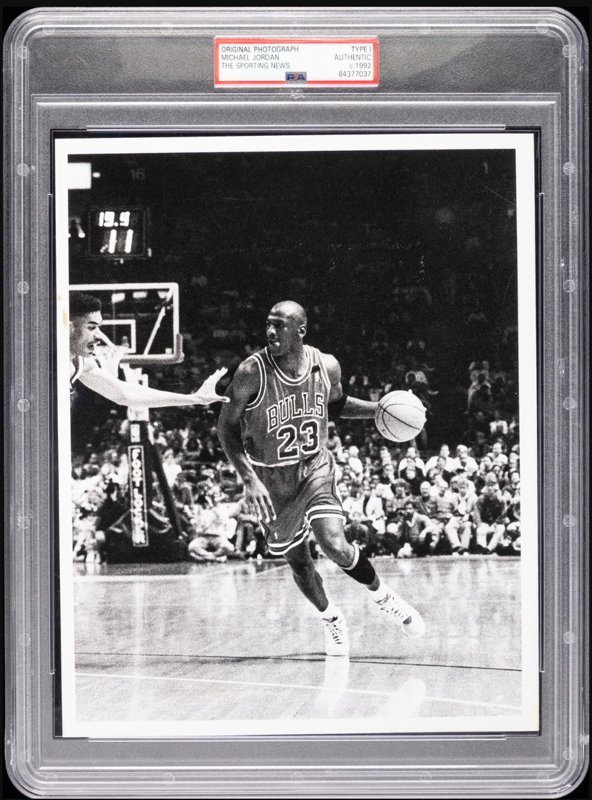
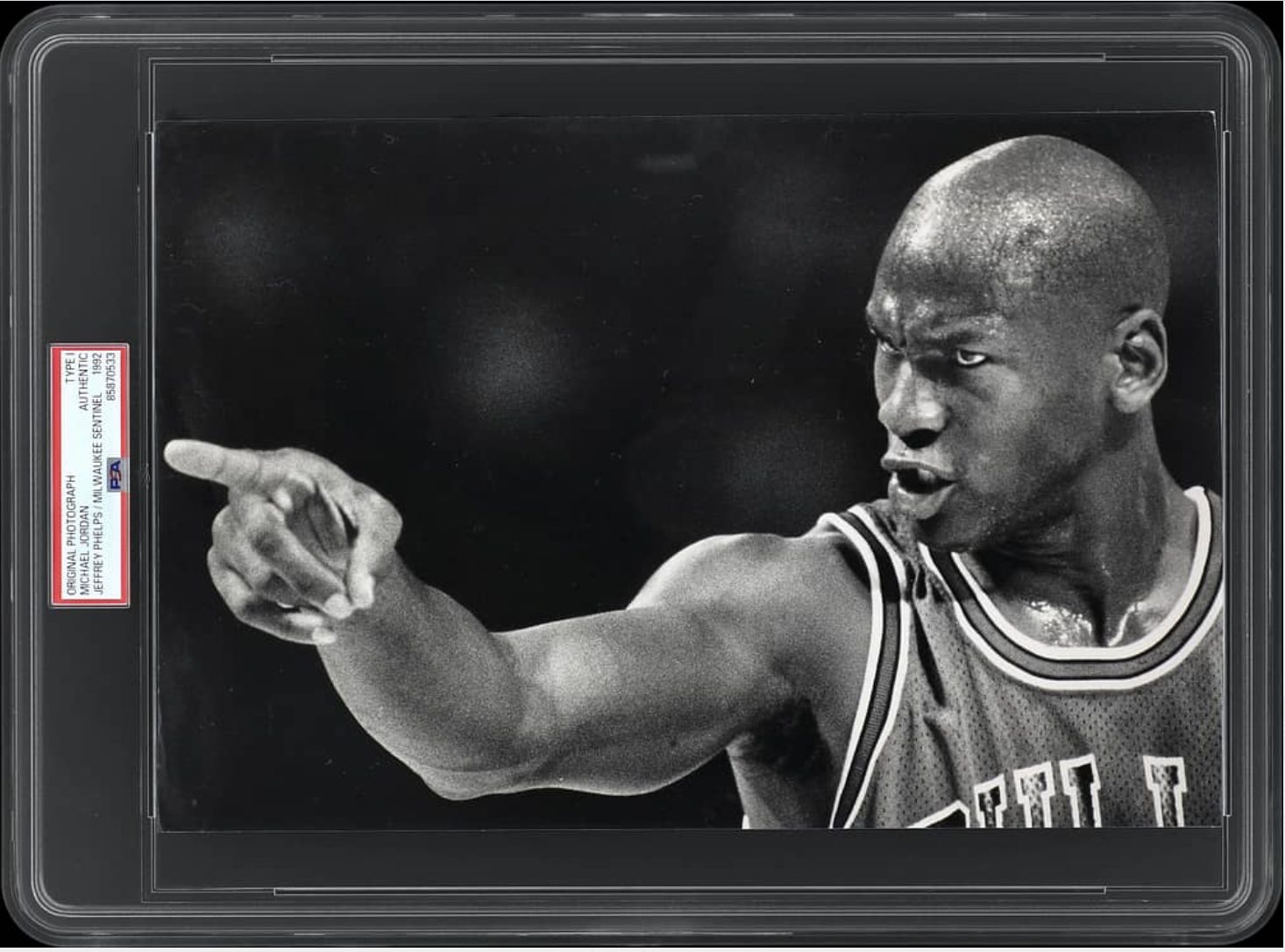
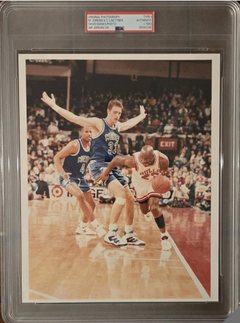
Portrait photographs — like the one shown here — document the person. Action photographs document the athlete. Both are valuable, but for different reasons. A clear action shot capturing Jordan mid-flight, mid-dunk, or driving to the basket tells a story that a studio portrait cannot. The most valuable action shots are those that capture his full athletic signature: the tongue out, the full extension on a dunk, the competitive intensity in a game situation.
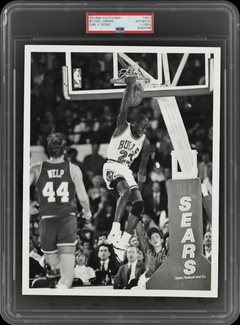
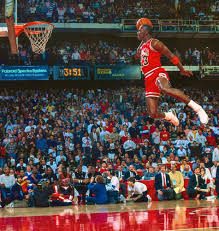
DimeLabs actively seeks action photographs — particularly from the dunk contest years, where Jordan's athletic gifts were most dramatically on display. His 1987 and 1988 Slam Dunk Contest performances are among the most iconic moments in basketball history, and original press photographs from those events are extraordinarily rare.
The shoes are a separate story
The Air Jordan brand is one of the most valuable sneaker franchises in history. Original press photographs that clearly show Jordan wearing early Air Jordan models — particularly from his rookie year through the mid-1980s when the shoes were first introduced and immediately banned by the NBA — carry additional significance that goes beyond basketball collecting into sneaker culture and brand history.
A Type 1 photograph showing Jordan's feet clearly, with an identifiable early Air Jordan model, is simultaneously a basketball collectible, a fashion artifact, and a piece of brand history. The collector market for early Jordan shoes is enormous — and those collectors and investors have not yet fully discovered Type 1 photography as an adjacent category.
Provenance on the back — what to look for
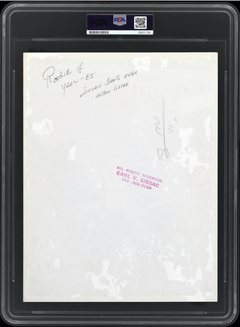
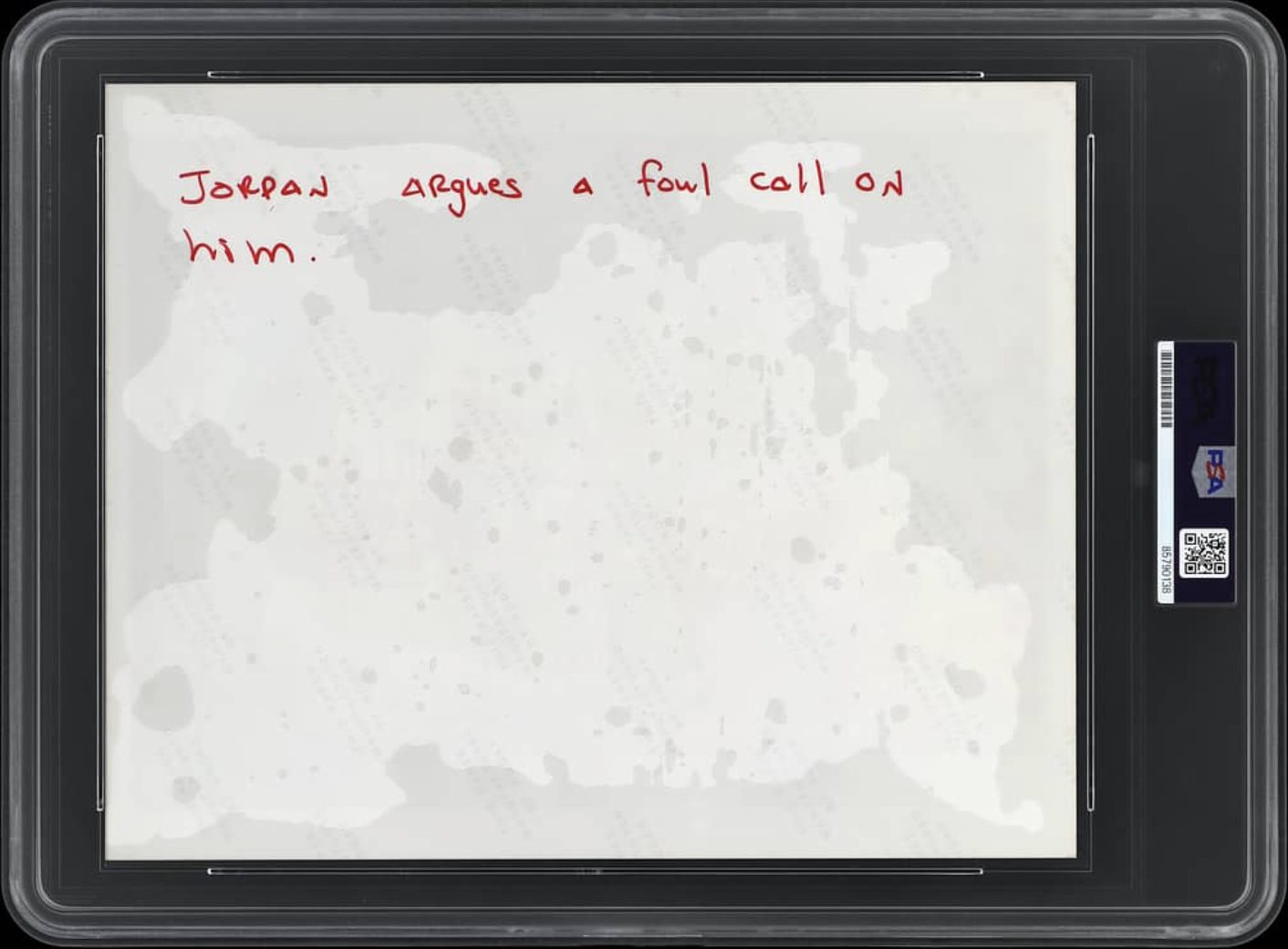
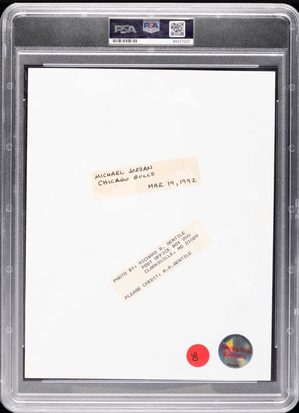
The back of a Type 1 photograph is where the story lives. Not all Type 1 prints carry rich provenance documentation — some were used once and filed, others were borrowed repeatedly over years. DimeLabs specifically targets photographs with documented publication histories: newspaper clipping inserts, multiple date stamps, library annotations, and return slips.
These marks are not flaws. They are records. A print with five documented loans between 1985 and 1988 is not more worn than a print with one loan — it is more documented. The provenance chain is longer, clearer, and more historically significant. This is the opposite of the logic applied to trading cards, where condition is everything. For Type 1 photographs, provenance documentation adds value rather than subtracting it.
White borders — presentation matters
Wire service prints were produced in various formats. The most desirable — both aesthetically and in terms of collector presentation — are those with clean white borders surrounding the photograph. The white border frames the image, gives it a finished quality, and makes the print look like the intentional artifact it is rather than a working copy. When a Type 1 photograph with rich back provenance also has clean white borders, the combination of historical significance and visual presentation is as strong as the category gets.
Highest priority
Cursive "Chicago" jersey
Rookie era and early career prints featuring the cursive Chicago script jersey — the most historically significant and aesthetically distinct uniform from Jordan's formative years.
High priority
Action shots — dunk, drive, tongue out
Photographs capturing Jordan's full athletic signature in game situations — dunks, drives, the iconic tongue, competitive intensity. Dunk contest years are especially sought after.
High priority
Early Air Jordan shoes visible
Prints showing identifiable early Air Jordan models worn by Jordan — bridging basketball collecting, sneaker culture, and brand history in a single image.
High priority
Rich back provenance
Multiple date stamps, newspaper clipping inserts, library annotations, return slips. The more documented the publication history, the stronger the provenance chain.
Strong preference
Clean white borders
Wire service prints with clean white borders surrounding the photograph — combining historical significance with the best possible presentation.
All eras
Early and late career
Rookie years through the championship era — each period tells a different chapter. We look for prints that anchor a specific, identifiable moment in his career.
Why the market hasn't caught up — and what that means
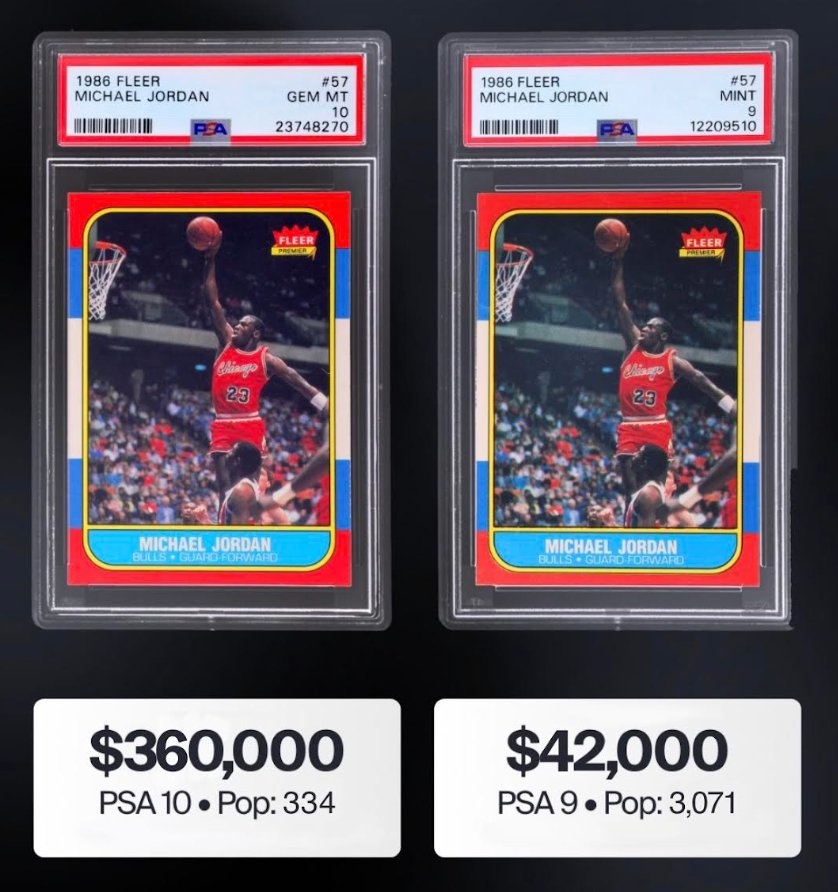
The sports card market has spent decades building infrastructure. PSA population reports. Cardladder price tracking. Auction house specialization. The hobby has developed a remarkably efficient system for discovering, grading, and trading cards at scale.
For Type 1 photographs, almost none of this infrastructure exists yet. PSA authenticates them — they can verify that a print is genuine and original — but they do not issue population reports. There is no Cardladder equivalent. Price discovery happens almost entirely in private, between collectors and dealers who understand what they're looking at.
This is both the challenge and the opportunity. The collector who builds a significant, well-documented position in PSA-authenticated Type 1 photographs of blue chip athletes right now is operating in a market that has not yet developed the tools to properly value what they hold. When that infrastructure arrives — and it will — those early positions will be revalued against a much more efficient benchmark.
The card market took decades to mature. The Type 1 photograph market is still in its first chapter. We intend to be early — and we intend to be specific about what we're looking for.
"The pink slip says RETURN TO LIBRARY. It came back every time — until now."
— DimeLabs · 1984–85 MJ Rookie Type 1 · PSA Cert #85450851